مقدمة
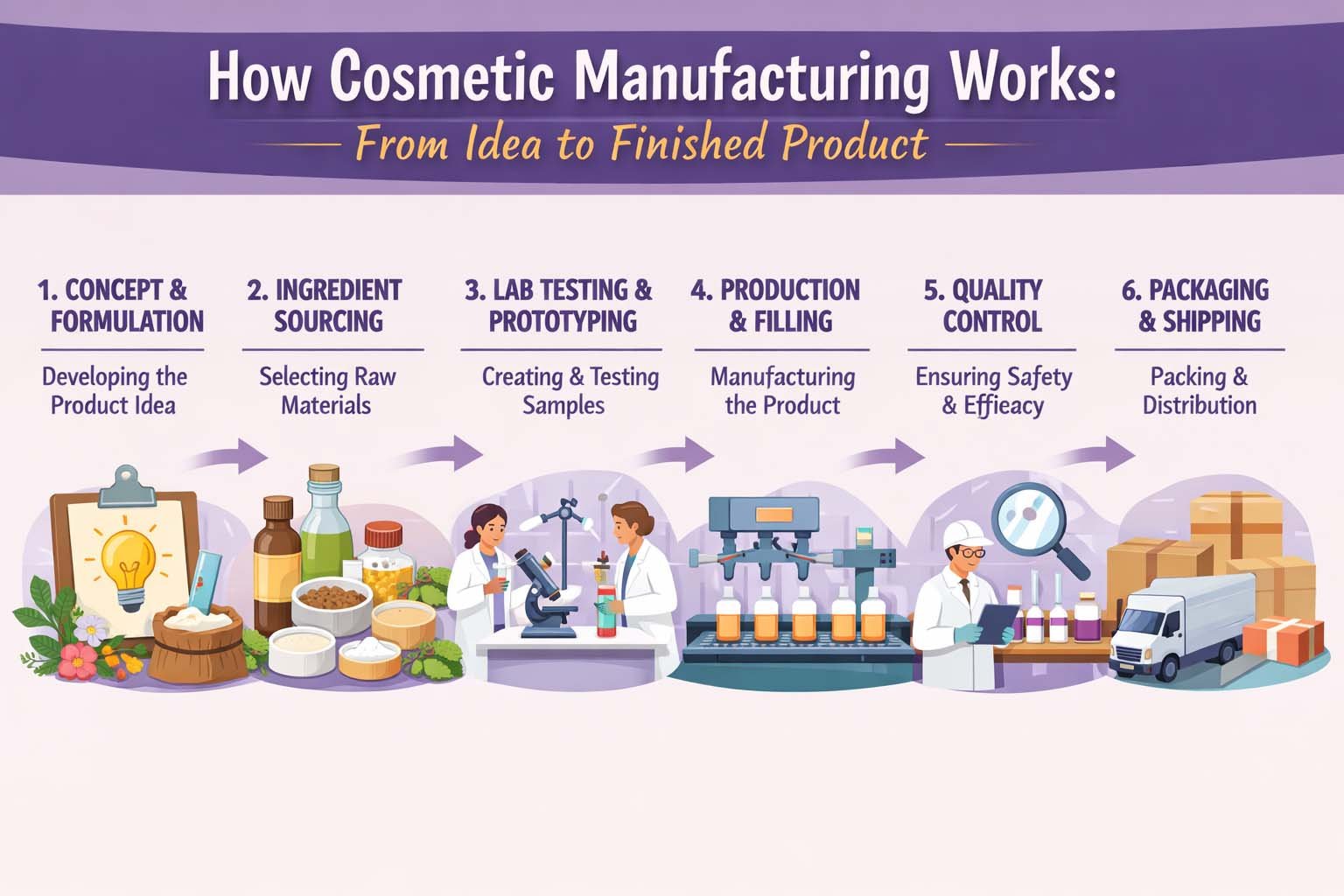
Understanding the skincare manufacturing process is essential for brands planning to launch personal care products. From initial concept development to final production and delivery, each step plays a critical role in product quality, compliance, and market success.
For businesses working with an experienced skincare manufacturer, having a clear understanding of the process helps improve communication, reduce delays, and ensure a smooth product launch. This guide explains each stage of the skincare manufacturing process and what brands should expect when working with an OEM partner.
Step 1 – Product Concept and Market Positioning
Every successful skincare product starts with a clear concept. This includes defining:
- Target market (mass, premium, clean beauty)
- Product type (body wash, body lotion, skincare)
- Key selling points (hydration, sensitive skin, natural ingredients)
- Price positioning
A well-defined concept allows the manufacturer to recommend suitable formulations and packaging options.
Explore body care manufacturing solutions →
Step 2 – Formula Selection or Development
At this stage, brands choose between:
- Standard formulations → faster and cost-effective
- Custom OEM formulations → unique and fully tailored
Formulation development includes ingredient selection, performance testing, and stability evaluation.
View body wash manufacturing capabilities →
Explore body lotion manufacturing →
Working with an experienced مصنّع المعدات الأصلية ensures formulations meet both performance and regulatory requirements.
Step 3 – Sample Testing and Approval
Before production begins, manufacturers prepare product samples for evaluation.
Brands review:
- Texture and viscosity
- Fragrance and sensory experience
- توافق التغليف
- Product performance
Feedback is used to refine the formulation until final approval is achieved.
This step is critical for ensuring the final product meets brand expectations.
Step 4 – Packaging Design and Development
Packaging is developed alongside the formulation to ensure consistency and efficiency.
Key elements include:
- Bottle or container selection
- تصميم الملصقات والعلامات التجارية
- Packaging materials
- عبوة كرتونية
Manufacturers often provide integrated packaging solutions, allowing brands to streamline the process.
Good packaging enhances both product functionality and brand identity.
Step 5 – Compliance and Regulatory Preparation
Before production, products must meet regulatory requirements for target markets.
This includes:
- الامتثال للمكونات
- متطلبات وضع العلامات
- Safety documentation
- Export certifications
Different regions (EU, US, Middle East) have different regulations, making this step essential for international brands.
مؤهل skincare manufacturer helps ensure all compliance requirements are met.
Step 6 – Mass Production
Once formulation and packaging are finalized, the product moves into large-scale manufacturing.
This stage includes:
- Batch production
- Quality control checks
- Process standardization
Consistency is critical to ensure every batch meets the same quality standards.
Professional manufacturers follow strict quality control systems to maintain product reliability.
Step 7 – Quality Inspection and Testing
Before shipment, finished products undergo final inspection.
This includes:
- Appearance checks
- Packaging integrity
- Stability verification
- Safety testing
Quality assurance ensures products are ready for distribution and meet market expectations.
Step 8 – Logistics and Delivery
After quality approval, products are prepared for delivery.
Manufacturers support:
- تصدير المستندات
- Shipping coordination
- Delivery scheduling
Efficient logistics ensures products reach their destination on time and in good condition.
How Long Does the Skincare Manufacturing Process Take?
The timeline varies depending on project complexity.
- Private label products → 2–6 weeks
- Custom OEM products → 6–12 weeks
Factors affecting timeline:
- تعقيد التركيبة
- Packaging development
- Compliance requirements
Working with an experienced manufacturer helps optimize timelines.
الأخطاء الشائعة التي يجب تجنبها
Brands should avoid:
- Unclear product positioning
- Rushing formulation approval
- Ignoring compliance requirements
- Choosing inexperienced manufacturers
These mistakes can lead to delays, quality issues, and increased costs.
خاتمة
The skincare manufacturing process involves multiple stages, from concept development to final delivery. Each step plays an important role in ensuring product quality, compliance, and market success.
By working with a reliable OEM skincare manufacturer, brands can simplify the process, reduce risks, and bring products to market efficiently.
Ready to Start Your Skincare Manufacturing Project?
Understanding the process is the first step—execution is what brings your product to life.