Yksi tärkeimmistä kysymyksistä, jotka tulevat mieleen suuhygieniabrändien hankintavaiheessa, on "Kuka valmistaa tuotteen?" Onko kyseessä OEM-valmistaja, white label -valmistus vai sopimusvalmistus? Valitsemasi valmistusmalli määrittää, kuka omistaa tuotteen immateriaalioikeudet, kuka maksaa asennuskustannukset, kuinka nopeasti tuote päätyy hyllyille ja kuka kantaa sääntelyyn ja pakkaamiseen liittyvät riskit.
Suunhoitotuotteiden tuotemerkeille väärän valmistajan valitseminen voi johtaa viivästyksiin tuotevalikoimaan pääsemisessä, takuuvaatimuksiin tai jopa tuotteiden poistamiseen valikoimasta. Tässä oppaassa käsittelimme kompromisseja, teknisiä laukaisevia tekijöitä ja vaatimustenmukaisuuden tarkastuspisteitä, joiden avulla voit valita oikean valmistustyypin.
Keskeiset tiedot
- OEM-valmistajaMaksat tuotekehityksestä, kun taas valmistaja valmistaa juuri sinun tarpeisiisi sopivan kaavan ja pakkauksen. Suosittelemme asiakkaillemme usein OEM-valmistajia, kun yksinoikeusvaatimukset, täysi hallinta ja pitkän aikavälin kate ovat etusijalla.
- White label / Private labelTämä malli on kustannustehokas, nopea ja ihanteellinen, jos haluat nopean lanseerauksen pienillä alkukustannuksilla. Pieniä tilausmääriä ja yksinkertaisia tuotteita valmistetaan usein tällä mallilla.
- Sopimusvalmistus/SopimustäyttöOmistat reseptin, kun taas valmistaja täyttää ja pakkaa sen. Valitse sopimustäyttö, jos sinulla on jo testattu resepti, mutta ei tehdasta.
Miksi sinun kannattaa valita OEM-, white label- ja sopimusvalmistuksen välillä
- Sinun on valittava malli, joka sopii yrityksesi vaiheeseen. Meillä oli startup-asiakas, jonka tutkimus- ja kehitysbudjetti oli vain $5K ja lanseerausaika 6 viikkoa, joten nopeus ja alhaiset kustannukset olivat ensiarvoisen tärkeitä. Vakiintuneiden brändien, jotka suunnittelevat skaalautumista, on suojattava immateriaalioikeutensa ja hallittava katteita.
- Liiketoiminnan talous muuttuu dramaattisesti, kun on kyse minimitilausmääristä, joten tarvitset mallin, joka toimii hyvin volyymiennusteesi kanssa.
- Tuotevaatimustesi patentoimiseksi suosittelemme mallia, joka takaa koostumuksen hallinnan ja täyden validoinnin. Esimerkiksi suuvesi toimii parhaiten koostumuksen IP:n ja maun pysyvyyden suhteen, joten tarvitset suuveden valmistusmalli joka varmistaa tuotteen tasalaatuisuuden.
- Kuinka nopeasti suuhygieniatuotteiden on oltava vähittäismyyntivalmiita? White label -valmistus on nopeaa.
- Suuret ketjut, vientiyritykset ja apteekkikanavat suosivat laitevalmistajia tai tarkastettuja sopimuskumppaneita tämän mallin tiukempien dokumentaatio- ja paikallisten rekisteröintivaatimusten vuoksi.
- Tuotteiden, kuten hammastahnojen, pakkaukset ovat riippuvaisia suositellusta päiväsaannista (RDA), tuubin toimittajan valvonnasta ja tiivisteen eheydestä. Siksi kannattaa valita validoitu pakkaus alkuperäisvalmistajan (OEM) pakkauksissa.
- Valmistusmallien vaihtaminen myöhemmin maksaa ja vie aikaa. Ole siis strateginen valitessasi alkuperäistä mallia äläkä käytä sitä väliaikaisena kiertotapana.
Voit lähettää meille erittelylomakkeen, niin saat meiltä 48 tunnin kuluessa sopivan mallin.
Mitä kukin valmistusmalli todella tarkoittaa (tosielämän esimerkein)
OEM (alkuperäislaitevalmistaja)
MääritelmäTässä sinä annat OEM-valmistaja suunnittelusi ja tarkat tiedot, ja he kehittävät, työkalut ja valmistavat sen puolestasi.
Milloin valita:
- Kun sinulla on ainutlaatuinen koostumus, erityisväitteitä tai odotat suuria määriä.
- Valitse OEM, kun sinun on hallittava hammastahnan hankauskykyä (RDA), tuubitoimittajan tietoja, suuveden maun pysyvyyttä tai hengityssuihkeen ponneaineen valintaa.
EsimerkkiJos asiakas tarvitsee ainutlaatuisia vaikuttavia aineita tai pakkauksia, suljemme pois white label -ratkaisut alusta alkaen. Teemme heidän kanssaan yhteistyötä OEM-valmistajana (OEM) valmistaaksemme matalan RDA:n hammastahnaformulaatioita ja vaadimme ISO/ADA-testausta ennen minkään hammastahnatuubin hyväksymistä. Viime kädessä tuotemerkki omistaa koostumuksen, vaatimukset ja immateriaalioikeudet, kun taas me, heidän valmistuskumppaninaan, tarjoamme tutkimus- ja kehitystyötä, työkaluja ja skaalausta.
Hyvät puoletTäysi hallinta, immateriaalioikeuksien suojaus ja paremmat voitot skaalautuvasti.
HaittojaKorkeammat aloituskustannukset, pidemmät läpimenoajat, raskaampi laadunvarmistus-/auditointitaakka ja suuremmat tilausmäärät.
White Label / Private Label
MääritelmäToimittaja/white label -yritys myy sinulle valmiita tuotteita, ja sinä merkitset ne omiksesi.
Milloin valita:
- Käytetään usein, kun haluat lanseerata tuotteen nopeasti, testata markkinoita tai myydä yksinkertaisia/hyödyke-SKU:ita.
- Suunhoitotuotteiden kohdalla osta white label -hammastahnaa vasta, kun olet vahvistanut viimeaikaiset RDA-raportit ja että tuubi/etiketti on esivalidoitu ja toimii markkinoillasi.
EsimerkkiTyöskentelimme kerran startup-yrityksen kanssa yksityismerkkien toimittaja uudistaakseen olemassa olevan valkaisutahnan, ja he lanseerasivat useita tuotteita viikkojen sisällä.
Hyvät puoletNopea ja edullinen aloittaa; alhaiset vähimmäistilausmäärät.
HaittojaKilpailluilla markkinoilla on vaikea erottua, ja katteet ovat pienemmät.
Sopimusvalmistus
MääritelmäSinä toimitat reseptin; valmistuskumppani täyttää, sulkee ja pakkaa sen. Säilytät immateriaalioikeudet kumppanisi tuotannon ajan.
Milloin valita:
- Sinulla on jo testattu kaava, mutta ei tehdasta, tai haluat välttää tehtaan investointikustannuksia.
EsimerkkiHammasklinikka, jolla on oma resepti, tekee sopimuksen pakkaajan kanssa putkien valmistuksesta ja erän aitoustodistusten toimittamisesta.
Hyvät puoletSäilyttää IP-omistuksesi ja reseptin hallinnan ilman tehtaan rakentamista
HaittojaEdellyttää tiukkaa laadunvarmistuksen luovutusta ja selkeät sopimusvastuut. Korkeammat yksikkökustannukset pienillä volyymeilla.
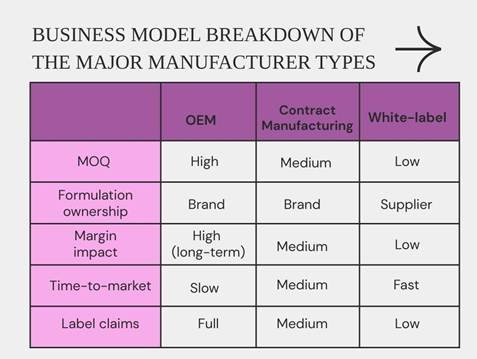
Lisätietoja saat lataamalla OEM- ja white-label-laitteiden vertailu-PDF-tiedoston.
Milloin valita OEM vs. white label vs. sopimusvalmistus
Valitse White label, jos:
- Tarvitset nopeimman markkinoilletuloajan ja alhaiset alkukustannukset.
- Testaat tuotteen sopivuutta markkinoille tai lanseeraat pienen määrän SKU-tuotteita.
- Tuote on perus (valkaiseva ja raikas) ilman säänneltyjä väitteitä.
- Pakolliset tarkastuksetValmistaja toimittaa tuoreet RDA-raportit (hammastahna), varmennetun tuubin yhteensopivuuden ja paikalliset etiketit.
- KompromissiAlhainen eriytyminen ja kapeammat katteet.
Valitse sopimusvalmistus, jos:
- Sinulla on jo validoitu resepti, mutta täyttökapasiteettia ei ole.
- Haluat säilyttää immateriaalioikeudet rakentamatta tehdasta.
- Sinun on skaalattava volyymeja nopeasti ilman suuria investointikustannuksia.
- Pakolliset tarkastuksetSopimuksessa mainitaan selvästi, kuka maksaa/omistaa RDA:n, se sisältää murtumis- ja stabiiliustestit ja määrittää, kuka kantaa pakkausvastuun.
- KompromissiEdellyttää tiukkaa laadunvarmistuksen siirtoa; yksikkökustannukset ovat korkeammat pienillä volyymeilla.
Valitse OEM, jos:
- Haluat patentoituja väitteitä, ainutlaatuisia vaikuttavia aineita tai eksklusiivisia pakkauksia.
- Suunnittelet suuria volyymeja ja pitkän aikavälin katteenhallintaa.
- Tuotteen monimutkaisuus on korkea (alhaisen RDA-herkkyyden omaava tahna, suuvesi, jolla on ainutlaatuinen makukemia, hengityssuihkeena käytettävät ponneainevaihtoehdot).
- Pakolliset tarkastuksetEnnen kuin allekirjoitamme OEM-sopimuksen, kysymme aina: "Kuka maksaa RDA-testauksen, jos ensimmäinen erä epäonnistuu?" ja neuvottelemme tästä etukäteen. Keskustelemme myös koko tutkimus- ja kehityssuunnitelmasta, työkalukustannuksista, akkreditoiduista laboratoriotestauksesta ja tiukoista IP/QA-lausekkeista.
- KompromissiKorkeammat asennuskustannukset, pidempi läpimenoaika ja suurempi vähimmäistilausmäärä.
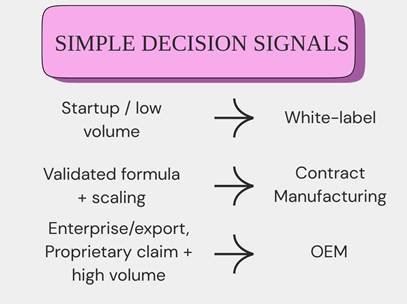
NyrkkisääntöValitse nopeus, hallinta tai kustannukset; ja dokumentoi, kuka maksaa testit, käsittelee virheet ja omistaa immateriaalioikeudet ennen allekirjoittamista.
Kysymyksiä, jotka kannattaa kysyä ennen liiketoimintamallin valitsemista
Kysymyksiä, jotka kannattaa kysyä ENNEN kuin sitoudut OEM-valmistajaan
- Kuka omistaa kaavan ja immateriaalioikeudet kehityksen jälkeen?
- Mitä työkalut/asennuskustannukset ovat ja kuka ne maksaa?
- Mikä on MÄÄRÄYSRAJA ja missä ovat yksikkökustannusten pudotusten volyymin raja-arvot?
- Mikä on täydellinen kehitys- ja validointiaikataulu (tutkimus ja kehitys, tutkimus- ja kehitystoiminta, vakaus)?
- Mainitaanko testiraporteissa menetelmän ja laboratorion akkreditointi (ISO/IEC 17025) ja sisällytetäänkö niihin raakadataa?
- Mitä tuubi- tai pakkaustoimittajia tarvitaan, ja kuka ne tarkastaa?
- Mitkä sopimuslausekkeet kattavat immateriaalioikeuksien siirron, tarkastusoikeudet, takuut, takaisinvetokustannukset ja vaatimustenvastaisuuksien korjaavat toimenpiteet?
Kysymyksiä, jotka kannattaa kysyä ENNEN white label-/private label -yksiköiden ostamista
- Onko kaava yksinoikeudella saatavilla vai myydäänkö sitä muille asiakkaille?
- Voiko toimittaja toimittaa SKU:lle tuoreet aitoustodistus- ja RDA-raportit?
- Tarjotaanko etiketit ja käännökset, ja kuka omistaa paikalliset sääntelyhakemukset?
- Mitä pakkausvaihtoehtoja on olemassa, ja onko SKU:ta testattu ensisijaisessa tuubissa/pakkauksessamme?
- Mitkä ovat uusintatilausten ja skaalauksen vähimmäismäärät ja toimitusajat?
- Millainen muutospyyntöprosessi on olemassa (kuvat, pienet kaavojen muutokset) ja mitkä ovat siihen liittyvät kustannukset?
- Kuka on vastuussa white label -tuotteiden vioista tai takaisinvedoista?
Kysymyksiä, jotka kannattaa kysyä ENNEN LUOVUTUSTA sopimusvalmistajalle
- Hyväksyttekö asiakkaan toimittaman reseptin ja allekirjoitatteko IP-/salassapitosopimuksen?
- Mikä on täyttölinjan kapasiteetti, aikataulun mukainen saatavuus ja vaihtoaika?
- Miten näytteiden säilytys ja erän aitoustodistukset hoidetaan? Mitä säilytetään ja kuinka kauan?
- Kuka rahoittaa ja omistaa täytetyn tuotteen RDA-, murtumis- ja stabiiliustestauksen (ja uudelleentestauksen)?
- Kuka toimittaa/hyväksyy tuubit ja sulkimet, ja kenellä on pakkausvastuu?
- Mitkä ovat vaihto- ja uudelleentyöstökustannukset, jos muutamme putkityyppiä tai kuvitusta?
- Sallitteko asiakasauditoinnit, kolmannen osapuolen laboratorionäytteenoton ja pääsyn laadunvalvontatietoihin?
Käytännön tapausskenaarioita – minkä valmistajan valita
Skenaario A — Lean-startup: Matkapakkaustesti (3 SKU:ta)
PerustajaAmina omistaa pienen hyvinvointibrändin. Hän lanseerasi kolmen tuotteen matkapakkauksen (hammastahna, mini-suuvesi, hengityssuihke) testatakseen lentokenttien kioskeissa myytäviä pop-up-myymälöitä, ja hänellä oli käytettävissä vain muutama tuhat dollaria. Valitsimme white label -hammastahnan ja mini-suuveden, koska ne lyhensivät kehitysaikaa kuuteen viikkoon ja maksoivat alle $5K. Hänen tilauksensa sisälsi viimeaikaiset RDA-raportit hammastahnalle, tuubin yhteensopivuustestin ja hengityssuihkeen ponneainevaatimustenmukaisuustodistukset.
TulosMyynti oli nopeaa ja hänen alkupanoksensa oli alhainen. Kompromissina oli se, että samoja kaavoja myytiin kilpailijoille.
OppituntiWhite label -menetelmä toimii nopeissa testeissä; suunnittele kuitenkin poistumispolku sopimustäyttöön tai OEM-valmistukseen, jos volyymi kasvaa. Hänen tapauksessaan suunnittelimme siirtymistä sopimustäyttöön, kun kysyntä oli vahvistettu.
Skenaario B – Kasvuvaihe: Validoitu kaava, skaalattu 75 000:een vuodessa
YritysBrightSmile on B2C-suunhoitobrändi. Ensimmäisen vuoden myynti osoitti kysynnän, ja he päättivät lisätä hammaskiilteen korjausväitteen ja laajentaa myyntikanaviaan. He säilyttivät kaavan ja siirtyivät sopimusvalmistusmalliin saavuttaakseen volyymitavoitteensa. Sopimuksessa määriteltiin, kuka maksaa RDA:sta, murtumis- ja stabiiliustesteistä, ja vaadittiin erän aitoustodistuksia ja näytteiden säilytystä.
TulosEi investointeja, katteet paranivat volyymin kasvaessa ja he pitivät teollis- ja tekijänoikeudet.
OppituntiSopimusvalmistus on ihanteellinen ratkaisu, kun omistat kaavan, mutta tarvitset tuotantokapasiteettia. Hanki kuitenkin kirjallinen sopimus testin omistajuudesta ja vastuusta.
Skenaario C — Yritys: Kansallinen vähittäiskauppa + vienti
JälleenmyyjäHealthMart halusi paikallisille hyllyilleen ja vientiin eksklusiivisen "herkkyystuotteiden" tuotelinjan. He tilasivat meiltä ainutlaatuisen matalan RDA:n tahnan ja räätälöidyn laminoitun tuubin kehittämisen. Tiimimme havaitsi, että he tarvitsivat työkaluja ja suuremman vähimmäistilausmäärän, mutta toimitimme ISO/ADA RDA -raportit heidän väitteidensä tueksi ja validoimme myös heidän pakkauksensa kuljetusta varten.
TulosHe varmistivat yksinoikeuden, saivat korkeamman hyllykatteen ja sujuvammat jälleenmyyjien hyväksynnät. OppituntiValitse OEM tiukan IP-valvonnan, yksinoikeusvaatimusten ja laajamittaisen vähittäismyynnin vuoksi. Muista, että tarvitset myös budjetin kehitysaikaa varten ja korkeamman vähimmäistilausmäärän.
Etkö vieläkään ole varma, mikä valmistajan tyyppi sopii brändillesi ja liiketoimintasi vaiheelle? Lähetä meille tekniset tiedot, jotta saat sopivan mallin suosituksen (48 tunnin vastausaika).
Due diligence -tarkistuslista (mitä varmistaa toimittajalta)
Toiminnalliset tarkastukset (nopeasti vahvistettavat asiat)
- Voivatko ne todella tuottaa sinulle sopivan volyymin?
- Käyttävätkö he laatujärjestelmiä?
- Säilyttävätkö he näytteitä ja kirjanpitoa?
- Kuka maksaa testauksesta?
- Mitä putkien tai sulkimien toimittajaa he käyttävät?
- Mitkä ovat heidän vähimmäistilausmääränsä, yksikkökustannusten raja-arvot ja työkalu-/vaihtokustannukset?
Lakiasiain- ja immateriaalioikeudet (pakolliset sopimustuotteet)
- Kuka omistaa IP:n/kaavan?
- Onko salassapitosopimuksia voimassa?
- Kuka maksaa työkalut?
- Kuka maksaa takaisinvedoista, uudelleenkäsittelystä tai hyvityksistä, jos erät epäonnistuvat?
- Sallivatko he sinun auditoida tai käyttää kolmannen osapuolen laboratoriota? *Sinun on kyettävä tähän.
Alueelliset ja markkinatarkastukset
- Kuka tekee rekisteröinnit ja tarjoaa käännettyjä kuvia kohdemarkkinoille (FDA/EU jne.)?
- Toivottavasti he toimittavat toimitusjohtajan, maahantuojan tiedot ja paikallisten sääntöjen mukaisen kuvituksen?
- Vaatiiko markkina paikallisia lisätestejä, jotka lisäävät aikaa?
Varoitusmerkkejä suunhoitotuotteiden valmistajan valinnassa
Pysähdy, jos näet jonkin näistä:
- Ei laboratorioakkreditointia.
- Epämääräiset tai puuttuvat hyväksymiskriteerit.
- Kieltäytyminen allekirjoittamasta immateriaalioikeuksia/työkaluja koskevia lausekkeita.
- Ei näytteen säilytystä tai aitoustodistusta.
- Viimeaikaisia RDA- tai pursketestitietoja ei voida näyttää.
Yleiset virheet vältettävät
- Ostaminen pelkän hinnan perusteella ilman laaduntarkistusta.
- Ei määritellä kuka maksaa uusintatestit.
- Putken/sulkimen yhteensopivuuskokeilujen ohittaminen.
- Tarjouspyynnössä ei ollut näytteenottosuunnitelmaa tai hyväksymiskriteerejä.
- Uudelleentestauksen ja -työkalujen uudelleenjärjestelyn budjetoimatta jättäminen, jos mallia muutetaan myöhemmin.
Johtopäätös
Valmistusmallin valinta on hintaa, määrämääriä ja immateriaalioikeuksien omistajuutta laajempi kysymys; se on liiketoimintavalinta, jota tulisi pitää strategisena valintana. OEM toimii parhaiten, jos haluat säilyttää omistusoikeudet ja jos tilausmäärät ovat suuria. Valitse white label -malli, jos sinun on lanseerattava tuote nopeasti ja edullisesti. Sopimusvalmistus on paras vaihtoehto, jos sinulla on jo testattu kaava, mutta ei tehdasta.
Ennen kuin allekirjoitat sopimuksen minkään tuotemerkin kanssa, sovi mitattavista hyväksymisrajoista (RDA, murtumisvaara, stabiilius), päätä kuka maksaa ja omistaa kunkin testin, ja lisää sopimukseen korjaavat toimenpiteet (uudelleenkäsittely, hyvitys, takaisinvetovaiheet). Tuotteesi on "vähittäismyyntivalmis", kun se on testattu, paperityöt ovat valmiit, pakkaus on validoitu ja etiketit on hyväksytty; muuten riskinä on tuotteen viivästyminen tai hylkääminen.
Seuraavat vaiheet: Jos tarvitset apua mallin valinnassa, varaa puhelu hankintatiimimme kanssa, lataa mallivertailu-PDF (XLSX-laskimella) tai pyydä näytepakkaus (sisältää RDA:n ja purskeraportit) aloittaaksesi mallin valinnan.
Usein kysytyt kysymykset OEM-valmistajista, white label -sertifioinnista ja sopimusvalmistuksesta
- Mitä eroa on sopimusvalmistuksen ja yksityisen tuotemerkin välillä?
Sopimusvalmistuksessa toimitat reseptin, kun taas valmistuskumppani tuottaa tuotteen. Omien merkkien valmistuksessa valmistaja/toimittaja toimittaa valmiit tuotenumerot (SKU), jotka sitten brändäät uudelleen.
- Mitä eroa on white label- ja OEM-tuotteilla?
White label -valmistus tarkoittaa, että jo valmistettujen tuotteiden brändäys muutetaan. OEM tarkoittaa, että tuotteet räätälöidään omien spesifikaatioidesi mukaisesti valmistajan tutkimus- ja kehitystyön sekä työkalujen avulla.
- Mitä eroa on OEM-valmistuksen ja sopimusvalmistuksen välillä?
OEM-yritys vastaa tuotekehityksestä ja täydellisestä valmistuksesta antamiesi eritelmien mukaisesti. Sopimusvalmistuksessa annat valmistajalle "oman kaavasi", ja he täyttävät ja viimeistelevät tuotannon.
- Onko white label parempi kuin private label?
White label ja private label viittaavat samoihin valmistusmalleihin; siksi kumpikaan ei ole toista parempi.
- Määrittääkö tuotetyyppi, mitä mallia käytetään valmistuksessa?
Kyllä, se on. Tuotteet, kuten hammastahnat, suuvedet ja hengityssuihkeet, jotka edellyttävät säänneltyjä väitteitä, suositeltua päiväannosta, maun pysyvyyttä tai ponneainesääntöjä, edellyttävät usein OEM- tai sopimusvalmistusta white label -tuotteiden sijaan.
- Mitä sopimuksen olennaisia asioita hankintatiimien tulisi pitää mielessä?
Sopimukseen tulisi sisältyä IP/työkalujen omistajuus, määrämäärä, toimitusajat, laadunvalvonnan hyväksyntä (RDA, pursketestaus), testien omistajuus, vastuu, oikeussuojakeinot ja tarkastusoikeudet.
- Voiko merkki vaihtaa mallia myöhemmin?
Kyllä, mutta saatat joutua testaamaan ja vaihtamaan työkaluja uudelleen, hankkimaan uudet määrämäärät, päivittämään etikettejä ja mahdollisesti täyttämään toimitusvajeita.
- Mitä lausekkeita OEM-sopimuksissa on oltava?
Sisällytettäviä lausekkeita ovat immateriaalioikeuksien luovutus, työkalukustannukset, yksinoikeus, hyväksymiskriteerit, takuut, takaisinvetovastuu, testausvastuut ja tarkastusoikeudet.