Dopo la produzione, arrivano le vendite e il marketing. Ciò che rende un dentifricio pronto per la vendita al dettaglio è un insieme di test e controlli di conformità, come la dose giornaliera raccomandata (RDA), i test di rottura e l'etichettatura. Senza questi controlli corretti, si rischia di incorrere in problemi gravi come la rottura del sigillo, una dose giornaliera raccomandata (RDA) elevata, un'etichettatura errata del Paese di origine e la non conformità alle normative regionali, tra gli altri.
In questo articolo descriviamo nel dettaglio i fattori del processo di produzione del dentifricio che potrebbero portare al ritiro del prodotto, i rischi che ne conseguono e come evitarli.
Punti chiave
- Un dentifricio pronto per la vendita al dettaglio è misurabile. In un progetto, abbiamo fatto un ulteriore sforzo ottenendo i certificati RDA da due diversi laboratori accreditati per rassicurare un rivenditore avverso al rischio. Questa decisione è costata di più in termini di spese di laboratorio, ma ha accelerato l'approvazione della quotazione perché l'acquirente si è fidato dei risultati.
- Un imballaggio inadeguato è una delle principali cause di respingimenti e resi di prodotti. Controlla il materiale del tubo, la resistenza della guarnizione e l'eventuale presenza di perdite/scoppi.
- Per evitare ritardi alla dogana, etichetta correttamente il tuo dentifricio. Includi un elenco corretto degli ingredienti e i nomi, le traduzioni e dettagli dell'importatore/produttore.
- Il pacchetto di conformità dovrebbe includere un kit di campioni, COA, RDA e report di scoppio, MSDS e un riepilogo della stabilità.
Il processo di produzione del dentifricio
Prima di stipulare un contratto con un fornitore, i team di approvvigionamento e marketing devono verificare che i seguenti passaggi e documenti fondamentali siano stati verificati:
- Formulazione e ingredienti: Elencare tutti gli ingredienti del dentifricio e specificare il tipo di abrasivo e l'abrasività relativa della dentina (RDA) desiderata. Indicare gli ingredienti attivi e il pH accettabile.
- Gestione degli ingredienti: Ottieni i COA, la tracciabilità dei lotti e le condizioni di conservazione per i materiali sensibili alla temperatura o all'umidità.
- Miscelazione e consistenza: Definire le fasi del processo (asciutto/umido), il tipo di miscelatore, la consistenza/flusso desiderati e i controlli per la temperatura e la rimozione dell'aria per mantenere la consistenza del prodotto.
- Test di qualità: Ottieni report RDA/abrasività, limiti microbici, controlli di pH e viscosità, efficacia dei conservanti, test di rottura dei tubi e dati di stabilità accelerati e in tempo reale.
- Riempimento e confezionamento di tubi: Selezionare il materiale del tubo (laminato, plastica, alluminio) in base alla barriera e alla resistenza allo scoppio. Tenere presente la calibrazione del riempitivo, l'integrità della tenuta, i controlli in linea di perdite/scoppi, la codifica dei lotti e le regole di rilavorazione/scarto.
- Etichettatura del dentifricio: L'etichetta finale dovrebbe indicare i nomi degli ingredienti (INCI), la quantità netta, il produttore/importatore, il paese di origine e le avvertenze; includere etichette tradotte ove necessario.
- Distribuzione e documentazione: Confermare il quantitativo minimo d'ordine (MOQ), i tempi di consegna, la pallettizzazione e i requisiti doganali. Includere un pacchetto di conformità: COA, MSDS, RDA, report di scoppio e riepilogo della stabilità per supportare l'inserimento e lo sdoganamento dei rivenditori.
Per preparare il dentifricio per la vendita al dettaglio, è necessario che questi passaggi e documenti siano stati completati. Di seguito sono riportati alcuni fattori che spesso causano ritardi nella commercializzazione del prodotto e vendita al dettaglio di dentifricio e come gestirli.
Spiegazione del punteggio RDA
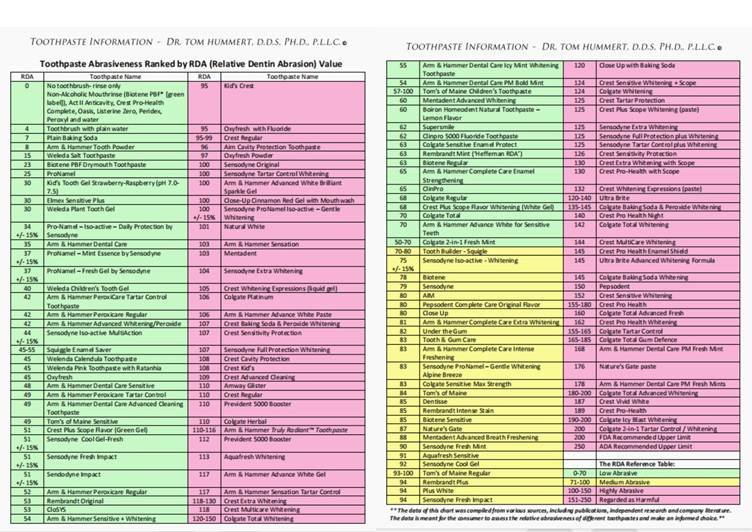
L'abrasività relativa della dentina (RDA) misura il grado di abrasività di un dentifricio nei confronti della dentina (lo strato interno più morbido del dente) rispetto allo smalto (la parte più dura e resistente).
I dentifrici sono classificati in base ai loro livelli RDA: basso (0-70), medio (71-100), alto (101-150) e limiti di pericolosità (151-250). I dentifrici con livelli RDA molto elevati "abradono" la dentina ed espongono lo smalto, predisponendolo a gravi rischi per la salute orale. Questi rischi incidono in ultima analisi sulle dichiarazioni dei consumatori, sulla garanzia e sull'accettazione del prodotto da parte dei rivenditori. Per gli utenti finali, ciò si tradurrà in un aumento dei reclami e dei tassi di reso, con il rischio che il dentifricio venga ritirato dal mercato.
Il livello di RDA da adottare nella produzione del dentifricio dipende principalmente dal target del prodotto. La maggior parte dei dentifrici sbiancanti rientra nei livelli di RDA medio-alti e alti, mentre i dentifrici per denti sensibili spesso hanno livelli inferiori. Tuttavia, è opportuno considerare i livelli di RDA accettabili nel mercato che si desidera esplorare nel processo di produzione del dentifricio.
Ad esempio, secondo la FDA, la dose giornaliera raccomandata (RDA) massima che un dentifricio dovrebbe avere (per essere venduto negli Stati Uniti) è 200. La maggior parte dei dentifrici sul mercato statunitense rientra nell'intervallo 100, tuttavia i dentifrici al carbone sono superiori a 100. Per il mercato dell'UE, il limite massimo accettabile di RDA (come definito dall'ISO) è 250.
Di recente, quando abbiamo formulato una pasta sbiancante, puntavamo a un RDA di circa 110. Tuttavia, dopo che i test di laboratorio hanno dato un valore di 130 (ancora al di sotto del limite statunitense di 200), il nostro responsabile marketing ha sostenuto la necessità di tornare a un RDA di 90 per affermare di essere "adatto alle pelli sensibili". Alla fine abbiamo suddiviso la linea in due prodotti: una pasta sbiancante ad alto RDA (con etichetta di avvertenza) e una pasta a bassa abrasività per pelli sensibili. Questa suddivisione è stata una strategia di esclusione/segmentazione deliberata, guidata dai risultati dei test e dal posizionamento di mercato.
I test RDA vengono eseguiti in laboratori standardizzati. Qui, il dentifricio in esame viene confrontato con un abrasivo di riferimento utilizzando campioni di dentina preparati. Viene eseguita una spazzolatura o lucidatura controllata e viene raccolto il materiale usurato dalla dentina. Il valore RDA viene quindi calcolato rispetto al riferimento. Il tuo dentifricio è pronto per il mercato se rimane entro i limiti RDA richiesti. Pertanto, dovresti dichiararlo nei contratti, insieme ai rapporti di laboratorio accreditati, ai metodi di prova e ai piani di campionamento.
Dimostrazione del test di rottura dell'imballaggio — Test del tubetto di dentifricio
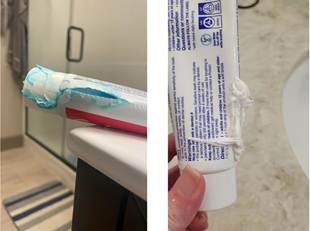
Il test di rottura della confezione di un dentifricio verifica la capacità del tubetto di resistere alla pressione interna e di sigillare il prodotto durante il riempimento, il trasporto e le variazioni di temperatura.
Il tubetto di dentifricio supera il test se non si rompe, non presenta perdite visibili dal sigillo e il sigillo rimane ermetico entro il livello di tolleranza concordato per quel campione. Un test non superato, invece, potrebbe presentare la rottura del tubetto, una fuoriuscita del contenuto o una delaminazione del sigillo.
Una volta abbiamo scartato un lotto di tubi sulla linea di produzione perché un difetto di laminazione causava piccole perdite. Correggere il fornitore (e pagare per materiale di qualità superiore) ha aumentato il nostro costo unitario di qualche centesimo, ma ci ha fatto risparmiare migliaia di euro in potenziali resi e danni all'immagine.
La prova di pressione di scoppio può essere eseguita in diversi modi, tra cui:
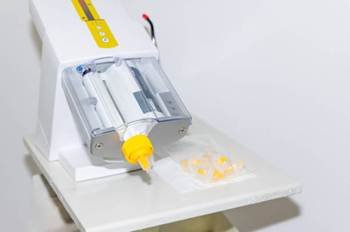
- Prova di soglia di scoppio: la pressione all'interno del tubo viene aumentata in modo continuo e uniforme fino al cedimento (scoppio).
- Prova di tenuta o di scorrimento: viene applicata una pressione sostenuta al tubo per verificare se cede dopo un periodo di tempo prestabilito.
- Prova di scorrimento fino alla rottura: viene mantenuta una pressione interna costante fino allo scoppio del tubo.
- Test combinati: il tubo viene mantenuto a una pressione prestabilita per un breve periodo, quindi la pressione viene aumentata fino a quando il tubo non scoppia.
Il mezzo di pressione può essere:
- Pressione pneumatica: il tubo viene gonfiato continuamente con aria fino a quando non si rompe (scoppia).
- Pressione idrostatica: un liquido (ad esempio l'acqua) viene pressurizzato nel tubo fino a farlo scoppiare.
Un tubetto di dentifricio pronto per la vendita al dettaglio dovrebbe avere una resistenza alla sigillatura e alla rottura che soddisfi i limiti concordati dal fornitore. I test di resistenza alla sigillatura/rottura misurano la resistenza del tappo/sigillo del dentifricio. Inoltre, non dovrebbe presentare perdite durante il periodo di conservazione o conservazione.
Questo test è così importante che un rivenditore dell'UE ha rifiutato 18.000 confezioni di dentifricio perché il sigillo del tubetto non ha superato il test di caduta. Anche i difetti di imballaggio sono una delle principali cause di feedback negativi su Amazon, e sicuramente non vorrai che il tuo marchio compaia su quelle recensioni.
Inviaci una richiesta per ottenere un esempio di rapporto sul test di rottura dei tubetti di dentifricio.
Come l'etichettatura del dentifricio influisce sullo sdoganamento e sull'elenco al dettaglio
Negli Stati Uniti, l'etichetta del dentifricio deve riportare:
- Ingredienti attivi e inattivi
- Indicazioni
- Avvertenze
- Informazioni sul produttore
- Istruzioni per l'uso
In genere, i prodotti alimentari e farmaceutici (compresi i dentifrici) prodotti per l'esportazione devono avere etichette che soddisfano i seguenti criteri:
- Tutte le informazioni devono essere accurate e non fuorvianti.
- L'etichetta deve essere redatta nella/e lingua/e ufficiale/i del mercato di destinazione.
- Il nome del marchio deve essere chiaramente indicato.
- Devono essere chiaramente indicati l'elenco degli ingredienti (con la dichiarazione degli allergeni), il contenuto netto del prodotto, il nome e l'indirizzo del produttore o del distributore e il paese di origine.
- Numero di lotto o di partita, data di produzione e data di scadenza o “da consumarsi preferibilmente entro”, istruzioni per la conservazione e l’uso e informazioni normative, come il numero di registrazione.
È l'etichettatura del dentifricio a determinare se i vostri prodotti supereranno i controlli all'importazione e arriveranno ai vostri rivenditori. I dentifrici con etichetta errata o non conformi possono essere sequestrati e le merci trattenute potrebbero richiedere il ricondizionamento dopo un periodo di tempo specifico o vedersi rifiutare l'ingresso.
Se lo spazio è limitato, a volte utilizziamo un codice QR (ove le normative lo consentano) per ospitare elenchi dettagliati degli ingredienti, il che mantiene pulita l'etichetta frontale. P.S. Abbiamo utilizzato questa soluzione in un mercato con requisiti linguistici molto rigorosi.
Le insidie più comuni nell'etichettatura dei dentifrici che comportano il fermo alla dogana sono:
- Nomi degli ingredienti poco chiari
- Mancano i dettagli dell'importatore o del paese di origine
- Affermazioni sui prodotti non supportate
- Quantità netta errata
- Informazioni obbligatorie non tradotte per i mercati di destinazione.
Documentazione di R&S e conformità di cui i marchi hanno bisogno prima della quotazione
Un dentifricio pronto per la vendita al dettaglio deve essere corredato da documenti chiari e verificabili sull'intero ciclo di vita del prodotto, dalla ricerca e sviluppo alla produzione e all'etichettatura. Questi documenti garantiscono che il prodotto sia sicuro e commercializzato entro i limiti di legge. Un dentifricio pienamente conforme ha molte più probabilità di ottenere l'approvazione dei principali rivenditori, dei marketplace online (ad esempio, Amazon) e degli enti regolatori.
Il dossier minimo per un dentifricio pronto per la vendita al dettaglio contiene (richiesto per SKU):
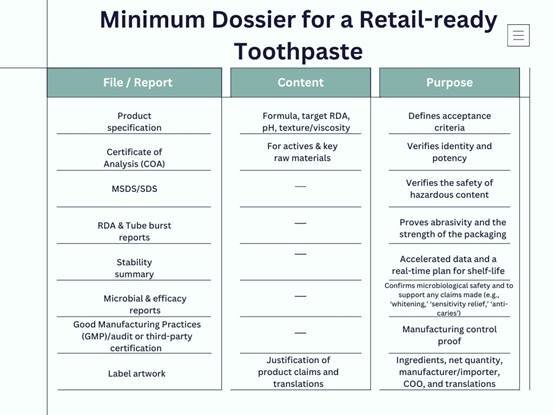
Nel corso degli anni, abbiamo imparato che tenere tutto organizzato è già metà dell'opera. Per ogni SKU, creiamo una "cartella dossier" con scansioni di ogni COA, rapporto di stabilità e certificato di prova. In un caso, un controllo di un rivenditore richiedeva prove dei limiti microbici su una SKU più vecchia. Poiché conservavamo i dati di laboratorio grezzi, siamo stati in grado di estrarre rapidamente i grafici necessari. Senza questo rapido accesso, avremmo perso la finestra di inserimento dei dati.
Gli standard normativi chiave a cui fare riferimento includono:
- USA: standard FDA sull'uso di cosmetici/farmaci da banco.
- UE: requisiti di accesso al mercato/CE e standard di sicurezza.
- Internazionale: standard ISO (ad esempio, ISO 11609, ISO 9001) e laboratori di prova di terze parti (SGS).
Come confezionare i documenti per le richieste di quotazione (RFQ) e le richieste di vendita al dettaglio
- Creare un PDF del Pacchetto di Conformità e assegnare nomi chiari ai file, ad esempio SKU_TestType_Date.pdf, e includere un indice. Noi nominiamo i PDF dei kit campione in questo modo (ad esempio, MINT-WH-001_COA_2025.pdf) in modo da evitare confusione tra decine di PDF. Nella pratica, abbiamo visto fornitori inviare nomi di file generici come report1.pdf, creando confusione. Questo piccolo passaggio preliminare fa risparmiare tempo al rivenditore.
- Includiamo anche una pagina "“sintesi”, elencando lo stato di superamento/fallimento di ciascun risultato del test, le date, l'accreditamento del laboratorio e il contatto per le richieste tecniche. In un caso, un fornitore di Amazon ha solo letto velocemente la pagina di riepilogo, quindi avere risultati concisi lì ha accelerato l'approvazione.
Cronologia e kit di esempio (aspettative)
- Richiedi un kit di campioni di partenza: 3-5 provette finite, COA, RDA, foto del test di scoppio e un riepilogo della stabilità.
- I tempi di risposta dei laboratori accreditati sono stimati in 2-4 settimane per i test RDA e burst. I report di stabilità richiedono più tempo (dati accelerati in settimane, dati in tempo reale completi in mesi).
- Includere questi tempi di consegna nelle scadenze delle richieste di quotazione (RFQ) e nelle finestre di accettazione.
Cerchiamo sempre di allungare i tempi. Ad esempio, se il laboratorio dice "RDA in 2-4 settimane", pianifichiamo per 4 settimane. I ritardi dell'ultimo minuto nella spedizione dei campioni sono comuni. A volte scegliamo il laboratorio più veloce (anche a un costo maggiore) per evitare ritardi, ma ovviamente, questo dipende dalle priorità del marchio.
Non sai da dove iniziare? Scarica la nostra Checklist di Conformità per la Vendita al Dettaglio (PDF) per dare il via al tuo processo di produzione di dentifricio.
Perché la formulazione del tuo dentifricio è importante e perché è importante preparare il tuo prodotto per la vendita al dettaglio
La formulazione determina le prestazioni del prodotto, la categoria e la struttura dei costi. Determina se il prodotto pulisce, sbianca o lenisce la sensibilità; quali materie prime è necessario reperire; quanto sarà complessa la produzione; e quanti test saranno necessari. Una formula mal specificata porta a lotti incoerenti, rifiuti da parte dei rivenditori, tassi di reso più elevati e costi nascosti per rilavorazioni o richiami.
Implicazioni aziendali
- Prestazioni = fiducia: risultati ripetibili riducono i reclami dei clienti e proteggono il posizionamento sugli scaffali.
- Costi e margini: i principi attivi speciali e le confezioni con specifiche più elevate aumentano il costo unitario e incidono sui prezzi.
- Tempo di commercializzazione: le nuove affermazioni necessitano di una maggiore convalida e di programmi di stabilità più lunghi.
- Adattamento al canale: alcuni rivenditori e mercati di esportazione richiedono dati o certificazioni aggiuntivi.
Lista di controllo della qualità
- Definire criteri di accettazione misurabili nelle specifiche: target RDA, intervallo di pH, viscosità, limiti microbici, efficacia conservante e endpoint di durata di conservazione.
- Chiedi al tuo produttore di dentifricio per COA di lotto, risultati di accreditamento di laboratorio e conservazione dei campioni per test distruttivi (ad esempio, rottura di tubi).
- Definire piani di campionamento, soglie di accettazione e rimedi contrattuali (in caso di rielaborazione, accredito, rifiuto).
- Assicurarsi che le dichiarazioni riportate sull'etichetta corrispondano ai dati dei test e alle concentrazioni degli ingredienti.
Prossimi passi pratici per gli appalti
- Includere i criteri di accettazione del controllo qualità nelle richieste di quotazione (RFQ).
- Richiedere prove di audit del fornitore e relazioni di laboratorio di terze parti.
- Test fattoriali e campionamenti nei modelli di costo.
Il controllo della formulazione del dentifricio trasparente riduce il rischio di quotazione, protegge i margini e preserva la reputazione del marchio.
Conclusione
Un dentifricio pronto per la vendita al dettaglio dovrebbe avere specifiche di prodotto misurabili, documenti di imballaggio validi e un dossier di conformità completo che includa la dose giornaliera raccomandata (RDA), il certificato di autenticità (COA), la scheda di sicurezza (MSDS), i dati di stabilità, le prove di etichettatura, i dati di rottura e i dati di sigillatura.
Prima di lanciare sul mercato il tuo marchio di dentifricio, verifica chi è responsabile della conformità dell'etichetta e dello sdoganamento, richiedi i dati grezzi dei test e l'accreditamento del laboratorio e stipula accordi contrattuali nel caso in cui si verifichino delle non conformità.
Collaborare con un produttore di dentifricio che fornisce kit di campioni, certificati RDA e di test di rottura, COA e riepiloghi di stabilità del prodotto finito riduce i tempi di approvazione del dentifricio e riduce il rischio di immissione sul mercato. Un prodotto pronto per la vendita al dettaglio è testato, documentato, convalidato per l'imballaggio e pre-approvato per l'etichettatura, altrimenti il rischio di rifiuto e di insuccesso del prodotto rimane elevato. Se sei pronto a passare dall'idea iniziale allo scaffale, scarica il nostro PDF di confronto tra modelli e la matrice RDA del dentifricio o contatta il nostro team di richiesta di preventivo per richiedere un kit di campioni e un pacchetto di conformità personalizzato per il tuo SKU.
Domande frequenti
- Qual è la dose giornaliera raccomandata (RDA) nel dentifricio?
L'RDA (Abrasività Dentinale Relativa) è un parametro di laboratorio che misura l'abrasività di un dentifricio sulla dentina (la parte più morbida del dente). Viene espresso come un numero singolo: un valore RDA più alto indica un dentifricio più abrasivo.
- Come si testa la dose giornaliera raccomandata (RDA) per il dentifricio?
Il test RDA viene eseguito con metodi di laboratorio standardizzati (ISO 11609). Un dente umano o animale (mucca) viene estratto, irradiato, privato dello smalto e inserito in una macchina per la spazzolatura. Questa macchina spazzola il dente secondo gli standard ADA e misura la radioattività dell'acqua di risciacquo.
- Perché vengono aggiunti ingredienti abrasivi al dentifricio?
Al dentifricio vengono aggiunti abrasivi come la silice e il carbonato di calcio per rimuovere meccanicamente la placca e le macchie superficiali.
- Quali caratteristiche della confezione aumentano l'attrattiva del dentifricio sugli scaffali dei negozi?
Il nome chiaro del marchio e i dettagli del prodotto, il forte contrasto di colori, le affermazioni leggibili, i sigilli antimanomissione e i formati in cartone o con linguetta adatti agli scaffali rendono il dentifricio più attraente sugli scaffali dei negozi.
- In che modo i marchi di dentifricio garantiscono che i loro prodotti rispettino gli standard di esposizione al dettaglio?
I marchi di dentifricio garantiscono che i loro prodotti rispettino gli standard di esposizione al dettaglio convalidando le dimensioni e i materiali delle unità e delle confezioni, i codici a barre/GTIN e i vassoi da scaffale in base alle specifiche del rivenditore. Forniscono modelli di scaffali e verificano la stabilità dei pallet e delle confezioni.
- Come scegliere i partner per il confezionamento di dentifricio pronto per la vendita al dettaglio?
Scegliete partner con capacità di produzione di tubi, esperienza in barriere, sistemi di controllo qualità, laboratori di prova o partner di laboratorio, tempi di consegna e quantitativi minimi documentati. Verificate i loro certificati, la disponibilità dei campioni e la disponibilità a fornire dati sui test di scoppio/sigillatura e la convalida degli imballaggi.
- I marchi possono riutilizzare i vecchi rapporti di prova?
Sì, è possibile. I marchi possono riutilizzare i vecchi report di prova se il report riguarda la stessa formula, lo stesso sito produttivo e la stessa linea, lo stesso imballaggio ed è sufficientemente recente per soddisfare i requisiti del rivenditore/ente regolatore. Se la formulazione, il fornitore, il processo, il materiale del tubetto o un periodo di tempo significativo (>12-24 mesi) sono trascorsi, è necessario ripetere il test.
- Chi paga i test?
In genere, il marchio (acquirente) paga la ricerca e sviluppo iniziale e i test di pre-produzione, e i produttori spesso includono il controllo qualità di routine dei lotti nei costi unitari. Tuttavia, è possibile negoziare le responsabilità dei test e la condivisione dei costi nel contratto e specificare chi paga i nuovi test di verifica dei guasti o la verifica di terze parti.
- Tubo in HDPE o tubo laminato: qual è più "sicuro per la vendita al dettaglio"?
I tubi laminati e multistrato sono generalmente più resistenti, quindi hanno una migliore resistenza allo scoppio/sigillatura e sono più sicuri per la vendita al dettaglio. I tubi in HDPE sono robusti e riciclabili, ma offrono una barriera inferiore e un comportamento di tenuta diverso. Il materiale di imballaggio ideale dipende anche dai test di compatibilità e dai requisiti della vendita al dettaglio.