
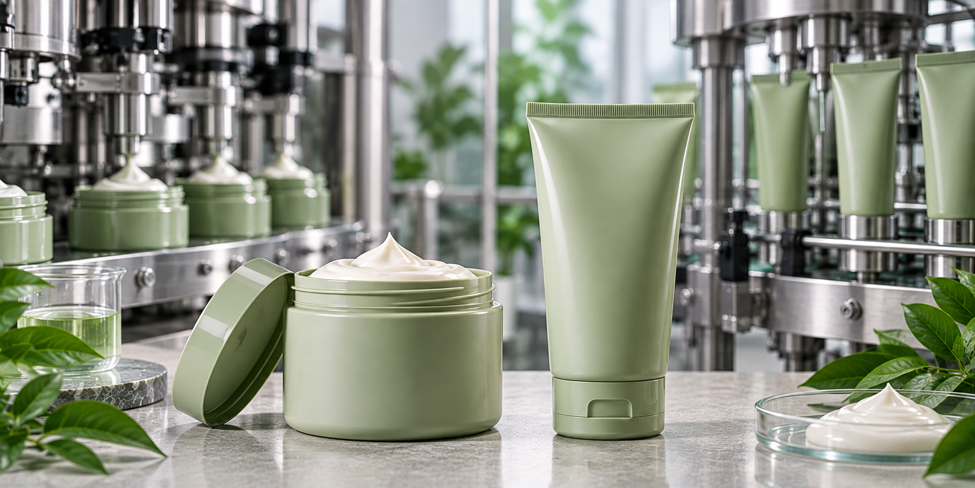
Jars and tubes are both common choices for hair masks, but the difference between them goes well beyond how the finished product looks on a shelf. Changing the format can also change how the mask is filled, sealed, decorated, transported, and sourced.
That means a packaging decision made early in development can affect production requirements later. The formula, filling setup, closure or sealing method, packaging MOQ, and even the way the product is positioned in the market may need to be considered differently depending on the format.
This guide compares hair mask jars and tubes across these production considerations, so you can see what changes with each format before moving into sampling and quotation.
What Changes When You Choose a Jar vs Tube for a Hair Mask?
A jar and a tube can hold the same hair mask without creating the same production requirements. The difference shows up across several dimensions:
- Formula and texture behaviour: How viscosity, texture, and flow interact with each format.
- Filling method: The process required to get the mask into the package.
- Sealing and leakage: Where each format needs to stay secure.
- Product exposure and headspace: How the package affects access and fill space.
- Decoration and MOQ: How construction and finishing affect sourcing.
- Transport performance: How each format can fail in shipping.
- Commercial positioning: How the format supports market presentation.
Viscosity matters throughout, but it shouldn’t be used as a standalone rule for choosing jar or tube. The actual formula, packaging configuration, and production requirements need to be considered together.
Formula and Texture Behaviour
The formula is the starting point, but viscosity or texture alone doesn’t determine whether a jar or tube is the right choice. What matters is how those characteristics interact with the way the product is filled and dispensed.
A jar provides wide-mouth access without requiring the product to pass through a dispensing orifice, while the formula still needs to move consistently through the selected filling process. A tube requires the user to squeeze a flexible container and push the mask through an orifice, so tube flexibility, orifice size, and squeeze force need to work with the formula’s texture.
There’s no fixed hair mask viscosity packaging format threshold that rules out either option. A thick mask can work in a tube and a thinner one can still need adjustment for a jar; the formula has to be evaluated against the selected format rather than assigned one by a general rule.
Filling Method and Production Setup
The filling process changes when you move from a jar to a tube. For the configurations reviewed by the factory, the jar direction uses ordinary filling equipment, while the tube direction requires filling followed by tail sealing.
Raise this difference during quotation and sampling; a format change may require the manufacturer to adjust the formula, filling parameters, or packaging direction. When developing the product with a hair care manufacturer, bring the intended format into that conversation early.
Sealing and Leakage Risk
The two formats differ in where the package is closed and where leakage can occur. For a jar, attention can be given to the fit between container and closure, the sealing surface, and whether the lid stays secure during handling and transport.
A tube has several potential areas where leakage can occur. The tail seal, shoulder, tube body, cap, and dispensing orifice can each be relevant when assessing the complete package. External compression during handling or transport can also contribute to tube leakage or tube-body deformation.
For the tube configurations reviewed by the factory, the tail seal, shoulder, cap, and dispensing area are relevant assessment points. More broadly, hair mask tube seal leakage should be evaluated across the complete filled package rather than focusing on the tail seal alone.
Product Exposure and Headspace
Product exposure differs by format. A jar’s wide opening means repeated direct access, creating a hair mask jar contamination risk that a tube’s smaller, enclosed dispensing path doesn’t carry in the same way. This doesn’t make jars unsuitable; preservation still depends on the formula, packaging system, and use pattern, not container shape alone.
Headspace also differs by format. For a jar, sufficient space may be needed for the closure to seat without pushing product over the edge. For a tube, clearance at the tail helps keep the product clear of the area that will be sealed. The appropriate headspace and fill arrangement should be considered alongside the selected filling and sealing process.
Decoration and Packaging MOQ
Format also affects decoration options and minimum order quantities. For tubes, the decoration method (printing directly versus a separate label) and the construction itself can shift the quantity a supplier will accept, often calculated per unique artwork or SKU rather than total order. In the factory’s current sourcing experience, tube packaging and printing can carry higher MOQ requirements than jar packaging, though this varies by supplier and specification.
Jars carry their own decoration and finishing choices, which shift quotation and production requirements in their own way. When comparing hair mask tube decoration MOQ, confirm construction, decoration method, and artwork requirements with the supplier before finalizing the format, rather than assuming one fixed number applies.
Transport and Shipping Performance
Each format fails differently in transit. A jar may face impact, cracking, a loosened lid, or leakage around the closure. A tube can face tail-seal failure, shoulder deformation, or compression damage. Secondary packaging, carton configuration, and cushioning also shape how either format performs in distribution.
For cosmetic jar vs tube shipping damage, evaluate the actual filled retail package with its intended secondary packaging rather than assuming one format is inherently more durable; neither is universally better, since each fails at different points.
Commercial Positioning
Packaging format also contributes to how a hair mask is presented. A jar can support a substantial, treatment-focused feel, while a tube can suit convenience- and everyday-use positioning.
That isn’t fixed for cosmetic tube vs jar commercial positioning. A premium finish, material, and overall execution can make either format work for a higher-end product. The right choice depends on the market you’re entering, not the format alone.
Hair Mask Jar vs Tube: 10-Dimension Decision Matrix
| Decision Dimension | Jar | Tube | What to Confirm |
| Formula viscosity | Wide-mouth access avoids squeeze-through-orifice requirements, while filling behaviour still needs confirmation | Thick or textured masks need to work with tube flexibility, orifice, and dispensing requirements | Does the actual formula work with the selected format? |
| Filling method | Filled into the jar, then disc/closure placement and capping | Filled into the tube, then tail sealing and closure assembly | Which filling and closing process fits the formula and package? |
| Sealing | Closure fit and sealing components must stay secure in handling and transport | Tail seal, shoulder, cap, and orifice form the closure system | Which sealing points need checking? |
| Leakage risk | May occur around the closure or sealing surface, especially if the lid loosens | Can originate from the tube body, shoulder, tail seal, cap, or orifice | Has the complete filled package been checked for leakage? |
| User access | Wide opening allows direct access | Product dispensed through the orifice by squeezing | Does access suit how the product will be used? |
| Product exposure | Repeated opening creates greater exposure considerations | Remaining product stays enclosed, dispensed through a smaller opening | Are formula, preservation system, and package suited to the use pattern? |
| Decoration | Labels and finishing options affect production requirements | Decoration method and construction affect sourcing and MOQ | Which decoration method fits the desired finish and quantity? |
| Packaging MOQ | Depends on selected jar and finishing requirements | Varies with construction, printing method, and artwork/SKU | What quantity does the supplier require for this exact spec? |
| Transport | Impact, cracking, lid loosening, and leakage are considerations | Tail-seal failure, shoulder deformation, and compression are considerations | How will the filled package and secondary packaging perform in transit? |
| Commercial positioning | Can support treatment-focused or premium presentation | Can support convenience-led or retail positioning | Which format and finish fit the intended positioning? |
This matrix doesn’t determine a universally better format. It’s a way to compare the production, packaging, and commercial implications of each option before committing to one.
When a Format Change Requires Revalidation
Switching from a jar to a tube, or the reverse, can change more than appearance: the new format may need a different filling process, sealing method, or setup. Where a change affects the formula, filling parameters, or packaging direction, review the new combination before commercial production rather than assuming the original approval still applies.
This does not automatically mean restarting development; the extent of re-evaluation depends on what the format change affects. For an OEM project, raise the change with your manufacturer before approving new packaging, so the production team can flag adjustments before it reaches manufacturing.
Working With an OEM Manufacturer on Hair Mask Packaging
It helps to settle the packaging requirements while the hair mask is still being developed, rather than choosing a package after the formula and production process are already fixed. The manufacturer can then look at the product and packaging together and identify requirements that may affect production.
Before requesting a quotation or samples, discuss:
- Formula and texture: Share the expected consistency and any characteristics that could affect filling or dispensing.
- Packaging format: Confirm whether you are considering a jar or tube and provide the relevant packaging specifications if already selected.
- Filling requirements: Discuss the filling process, equipment, and any adjustments the selected format may require.
- Sealing requirements: Clarify how the package will be closed and which sealing points need to be checked.
- Decoration: Share your preferred printing, labeling, or finishing requirements.
- MOQ: Confirm the packaging quantity required for the selected construction, decoration method, and artwork.
- Transport expectations: Explain the intended distribution conditions so the filled package can be considered accordingly.
- Target market and positioning: Share where the product will be sold and the type of presentation you want the packaging to deliver.
For a project with a hair mask manufacturer, these details give the production team a clearer picture of what needs to be coordinated before sampling. RuiqiGO can manufacture the hair mask through OEM, ODM, or private-label production and support the packaging process by helping coordinate suitable options with packaging suppliers.
If you need to assess how the formula and selected package work together, the personal care packaging compatibility process provides another useful point of reference when discussing the project with the manufacturer.
Frequently Asked Questions
Is a jar or tube better for thick hair masks?
Neither format is automatically better. A thick formula can work with either one, provided the formula, packaging configuration, and filling process are suitable for each other.
What is the main difference between jar and tube filling?
A jar is filled into the container and then closed and capped. A tube is filled before the open end is tail-sealed and the closure is assembled, so the production sequence and equipment are different.
Can changing from a jar to a tube require formula adjustment?
It can. A format change may require adjustments to the formula or filling parameters if the new packaging setup handles the product differently.
Do tubes usually have higher packaging MOQs than jars?
Not always. Tube MOQ can vary depending on the construction, decoration or printing method, and artwork requirements. In the factory’s current sourcing experience, tubes can carry higher MOQ requirements than jars.
What should I check before choosing a hair mask package?
Consider the formula, filling and sealing process, packaging MOQ, transport requirements, product exposure, and how the format fits the intended market. Reviewing these together gives you a clearer basis for the packaging decision.
Choose the Format Based on What It Changes
Choosing a jar or tube for a hair mask is a production decision, not simply a format preference. The choice can affect the formula, filling, sealing, exposure, headspace, decoration and MOQ, transport, and commercial positioning.
Compare those consequences against your specific project before requesting samples or committing to production.
Planning to manufacture a hair mask and deciding between a jar and tube?
Contact RuiqiGO’s manufacturing team to discuss your OEM, ODM, or private-label manufacturing requirements. Our team can also guide you through the packaging decision and coordinate with suitable packaging suppliers based on your formula, production needs, and target market.