Choosing a bottle for a leave-in conditioner may seem like a separate decision from developing the formula. However, the two can affect how the finished product dispenses and performs.
Formula flow behaviour, texture, intended application, and dispensing mechanism all need to work together. A package that looks right for the product category may not necessarily deliver the experience or performance the formula requires.
This article explains how to evaluate leave-in conditioner packaging options by considering the formula, application needs, dispensing behaviour, and compatibility before committing to bulk production.
Why “Spray or Cream?” Is the Wrong First Question
It is easy to assume that a thin leave-in conditioner should be sprayed, while a thicker one belongs in a pump or cream-style package. However, this is not a universal rule. A formula’s flow behaviour, texture, intended application, and dispensing components can interact in ways that make the choice less straightforward.
The better starting point is the formula itself. Consider how it flows, what application experience you want, how the product should be dispensed, and which mechanism can deliver it consistently.
That means there may be more than one viable leave-in conditioner packaging direction for a given product concept. Where compatibility confirmation is required, the intended formula and package combination should be evaluated rather than relying on viscosity alone.
Start With the Formula: Texture, Viscosity, and Flow
The packaging decision should begin with the formula’s physical characteristics rather than a preferred bottle style. Knowing how the product moves and feels gives you a better basis for deciding which dispensing direction is worth evaluating.
Viscosity and flow behaviour are part of that assessment. Viscosity affects how a formula moves through a dispensing system, but simply calling a formula thin or thick does not tell you how it will perform. Formula flow behaviour and other relevant characteristics should be shared with the manufacturer before packaging is settled.
Texture adds another layer to the decision. A milky or light emulsion, lotion-like formula, and higher-viscosity cream-type treatment can each create different dispensing considerations. These are also formulation directions RuiqiGO has confirmed experience developing and producing for leave-in conditioner products.
A thin or thick description alone is therefore not enough. Dispensing-component structure, formula flow behaviour, texture, intended application, and actual package performance all need to be considered together. This makes leave-in conditioner viscosity an important factor to evaluate, rather than a rule for choosing the package.
Match Application Needs to Dispensing Behavior
Once the formula’s characteristics are understood, the next consideration is how the product is expected to reach the hair. The dispensing mechanism should support the intended application rather than being selected independently from it.
Coverage
Consider whether the product needs to spread broadly and evenly across the hair or be directed toward specific areas. Broad coverage may make a spray direction worth evaluating, while targeted application may make a more controlled dispensing direction worth considering.
The important point is that coverage is one factor in the evaluation. The actual formula and dispensing component still need to work together to deliver the intended application.
Dosage Control
The amount delivered with each application can also influence which dispensing direction is worth evaluating. Some leave-in products may call for relatively controlled, repeatable amounts, while others may be intended for lighter or more distributed application.
This does not make one mechanism automatically better. The required level of dosage control should be considered alongside the formula’s flow behaviour and the way users are expected to apply the product.
Application Surface
Think about whether the leave-in is intended for wet hair, dry hair, or both. The application surface can influence how the product needs to spread and how the dispensing experience should feel.
This is particularly relevant when evaluating a sprayable leave-in conditioner formulation, where the intended distribution across the hair needs to work with both the formula and dispensing system.
Frequency and Use Pattern
A product intended for light daily application may call for a different dispensing experience from one designed for more intensive treatment use. Frequency and use pattern can therefore help define the coverage, control, and convenience the package needs to provide.
These factors are directions worth evaluating, not fixed package recommendations. The final dispensing choice depends on the specific formula, application needs, and package combination.
Dispensing Mechanisms Across the Spectrum
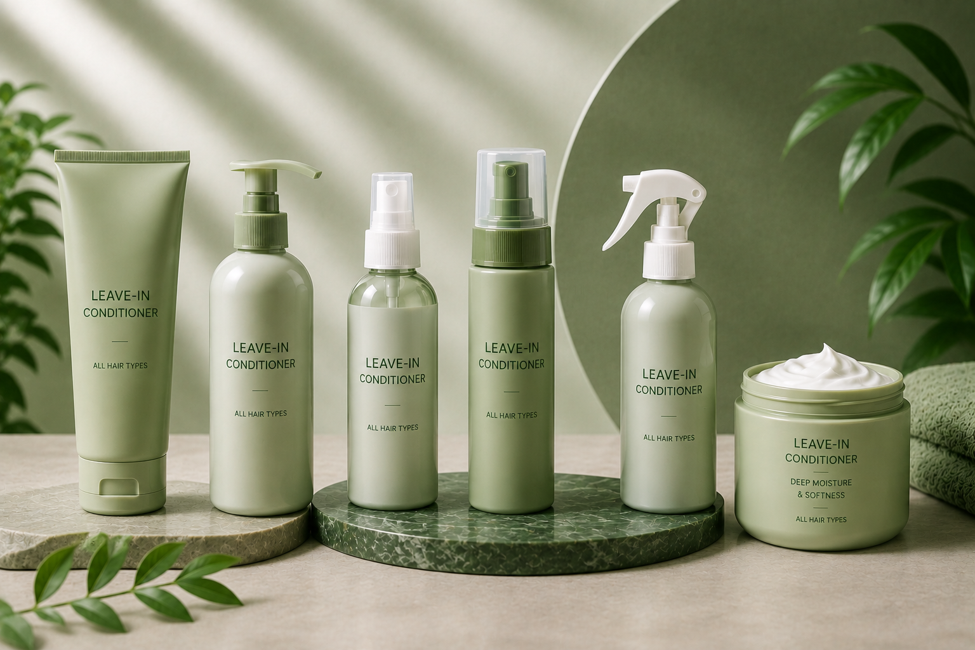
There is more than one dispensing direction worth evaluating for a leave-in conditioner. Spray and pump systems are common options, but other suitable packaging structures may also be considered when the formula and intended application call for them.
Spray Dispensing
Spray dispensing can be worth evaluating when the product is intended for broad, even coverage or lighter application. The formula and spray component need to be considered together to determine whether they can deliver the intended output consistently.
Pump Dispensing
Pump dispensing can be worth evaluating when the product calls for more controlled application and may be suitable for lotion or cream-type leave-in directions. The pump structure and output still need to be assessed against the formula’s flow behaviour and intended application.
Other Dispensing Structures
Spray and pump systems are not the only possible directions. Depending on the formula and intended application, other dispensing structures may also be worth evaluating, such as squeeze bottles, flip-top bottles, or other suitable dispensing packages.
These options may provide different levels of control, coverage, or application experience. Their suitability still depends on how the actual formula behaves with the selected component and whether the package can deliver the product consistently.
RuiqiGO has confirmed development and production experience with conditioning milk or light emulsion, pump-dispensed lotion, and higher-viscosity cream-type leave-in treatment. Other dispensing directions can still be evaluated during development, but should not be presented as confirmed previous factory project experience.
The right direction is therefore determined by the specific formula, intended application, dispensing component, and package performance rather than by a fixed formula-to-package rule.
Formula–Packaging Decision Matrix
Once the formula direction and intended application are clear, a simple comparison can help narrow the dispensing options worth evaluating. The matrix below brings those considerations together without treating any package as an automatic match for a particular formula.
| Formula / Product Direction | Application Need | Dispensing Options to Evaluate | Main Compatibility Question | What to Check During Evaluation |
| Conditioning milk / light emulsion | Consider intended coverage, dosage, and application method | Pump or other dispensing direction to evaluate; a spray direction may also be technically evaluated depending on the actual formula/package combination | Can the selected dispensing component deliver the formula as intended? | Dispensing performance and formula/package compatibility |
| Medium-viscosity lotion | Consider controlled or broader application needs | Pump or other appropriate dispensing direction | Does the dispensing structure and output work with the formula’s flow behaviour and intended use? | Dispensing performance and relevant packaging observations |
| Higher-viscosity cream-type leave-in treatment | Consider targeted or controlled application | Appropriate pump, dispensing, or other packaging direction to evaluate | Can the dispensing system handle the formula consistently? | Normal dispensing and relevant package performance |
| Other formula directions | Determine application needs from the actual product concept | Evaluate suitable dispensing directions based on formula and use | Does the actual formula/package combination perform as intended? | Project-specific compatibility observations |
These are directions for evaluation, not fixed package assignments. A formula may support more than one dispensing direction, so depending on the project, the intended formula/package combination should be evaluated before bulk packaging procurement and commercial production where compatibility confirmation is required.
When Formula and Package Don’t Naturally Match
A preferred package can look suitable for a leave-in conditioner and still fail to work well with the intended formula. RuiqiGO has confirmed two relevant mismatch observations during development, namely difficulty dispensing or failure to dispense properly and spray-component clogging.
When this happens, the solution is not automatically to change the formula. The development team may instead compare a different dispensing direction or evaluate multiple formula and package combinations to identify a workable match.
This is why an OEM leave-in conditioner formula should not be considered separately from its intended dispensing system. The important question is whether the specific combination performs as required, rather than whether the formula or package appears suitable on its own.
Validating the Formula-Package Combination Before Bulk Production
Depending on the project, the actual or intended formula and packaging combination may be evaluated together before commercial production. This helps determine whether the selected dispensing direction works with the formula and intended application where compatibility confirmation is required.
Dispensing Performance
The evaluation can include whether the product dispenses as intended, including normal dispensing, pump performance where applicable, and spray pattern or uniformity where a spray system is being considered.
Formula and Packaging Behaviour
Where relevant, the combination can also be observed for issues such as leakage, separation, appearance changes, packaging abnormalities, or other stability-related observations. These are things to check during evaluation, not fixed factory-case findings.
Component Performance
The dispensing component itself needs to work properly with the formula. The confirmed mismatch patterns include difficulty dispensing or failure to dispense properly and spray-component clogging. If either occurs, the combination may require further evaluation.
The scope of evaluation depends on the specific formula and package combination. It should therefore remain project-dependent rather than being treated as a universal release gate or fixed testing protocol.
What to Decide Before Requesting Samples
Before requesting packaging samples, define how the leave-in conditioner is expected to work and how it will be used. This gives the manufacturer enough direction to evaluate suitable formula and dispensing combinations.
Consider these points:
- Formula characteristics: What are the approximate viscosity, texture, and flow behaviour?
- Application: Is the product intended for broad coverage, targeted application, or another method?
- Dosage: Does the use case require controlled amounts or lighter distribution?
- Dispensing: Which dispensing directions should be evaluated against those requirements?
- Compatibility: Does the intended package make sense for the actual formula rather than simply the product category?
- Validation: Has the formula and package combination been evaluated together, and what observations need to be checked before commercial production?
- Alternative directions: If the preferred combination does not perform naturally, are you prepared to compare another dispensing direction or formula-package combination?
Making these decisions early gives the sampling stage a clearer purpose and reduces the risk of selecting packaging based on appearance alone.
Private Label and Custom Packaging Considerations
Private-label and OEM buyers may already have a preferred bottle, pump, spray component, or packaging appearance based on their branding or commercial plans. That preference can be part of the brief, but it should not be treated as proof that the package will work with the formula.
For private label leave-in conditioner packaging, the component still needs to be considered alongside the actual formula and intended application. During leave-in conditioner manufacturing, the formula and packaging direction can be evaluated together where compatibility confirmation is required.
If the preferred combination does not perform as expected, another dispensing direction or formula-package combination may need to be evaluated. This keeps customization aligned with product performance rather than treating packaging selection as a decision that can be finalized independently.
Frequently Asked Questions
Should leave-in conditioner packaging be a spray, pump, or cream jar?
There is no universal answer. The formula’s flow behaviour, intended application, dispensing mechanism, and package compatibility all need to be considered together before choosing a direction.
Can a thick leave-in conditioner be sprayed?
Thickness alone does not determine whether a spray direction is viable. The actual formula and spray component may need to be evaluated together where compatibility confirmation is required.
What viscosity works best for a spray bottle?
There is no universal viscosity cutoff that guarantees suitable spray performance. Viscosity is one factor among several, and the actual formula and spray component can be evaluated together where compatibility confirmation is required.
Does packaging affect how a leave-in conditioner performs?
It can. Dispensing performance, leakage, separation, appearance changes, and other observations can depend on how the specific formula interacts with its packaging and dispensing components.
Is airless packaging suitable for leave-in conditioner?
It can be considered, but suitability depends on the specific formula, dispensing system, intended application, and package compatibility. Where compatibility confirmation is required, the actual combination should be evaluated rather than treating airless packaging as universally suitable or unsuitable.
What’s the difference between leave-in conditioner spray and cream?
Spray and cream-type leave-ins differ mainly in their intended dispensing and application direction. The appropriate format depends on the actual formula, intended use, and dispensing system rather than the product label alone.
Choose the Right Leave-In Conditioner Packaging With RuiqiGO
Leave-in conditioner packaging should not be selected independently of the formula. The right direction comes from considering the formula’s characteristics, intended application, dispensing mechanism, and how the complete combination performs.
RuiqiGO can coordinate formula-to-packaging evaluation with the manufacturing and packaging teams, helping brands assess the relationship between the leave-in conditioner formula and intended dispensing direction.
Depending on the project, the intended formula/package combination should be evaluated before bulk packaging procurement and commercial production where compatibility confirmation is required.
If you’re ready to develop your packaging direction, contact RuiqiGO’s manufacturing team to discuss your formula, packaging requirements, and next steps.