You request a private-label conditioner quotation from two OEM manufacturers, giving both of them what appears to be the same product requirements. Then the quotations come back, and the numbers are surprisingly far apart.
Does the higher quotation mean the manufacturer is overcharging? Or does the lower quotation mean you are getting an inferior product?
Not necessarily.
A private label conditioner cost is shaped by the requirements behind the project, including the formulation, packaging, order quantity, number of SKUs, testing, and production requirements. Two products may look similar while having very different cost structures behind them.
This guide breaks down the factors that influence private label conditioner pricing and shows you what to compare behind the final number, so you can evaluate OEM quotations based on the actual scope of the project rather than simply choosing the lowest price.
Why Two Conditioner Quotations Are Rarely Identical
An OEM quotation is based on the scope of the manufacturing project, not simply on the fact that both products are conditioners. Two buyers can use the same product name and still require very different materials, packaging, production quantities, or development work.
For example, one quotation may cover a stock formulation in a standard bottle, while another may involve a modified formula, customized packaging, several SKUs, and additional testing. Both suppliers may describe the result as a private-label conditioner, but they are not pricing the same project.
The main areas that can create differences include:
- Formula and material system
- Packaging
- Printing and decoration
- MOQ
- SKU count
- Testing and certification
- Special production requirements
This is why the final number on a conditioner OEM quotation is only useful when you understand what that number covers. Before deciding that one supplier is cheaper or more expensive, compare the scope behind the quote.
What Actually Goes Into a Conditioner OEM Quotation?
A quotation is essentially the manufacturer’s estimate of what it will take to complete your specific project. That estimate can cover more than the finished product itself because some projects require development work before anything reaches commercial production.
One important distinction is whether the formulation is stock, modified, or fully custom.
A stock formulation is an existing formula that already fits the intended product direction and requires little or no formulation development. A modified formulation starts from an existing formula but requires adjustments to meet specific product requirements. A fully custom formulation is developed around the buyer’s particular requirements rather than adapted from an existing formula.
These options can create different development and material requirements, which can be reflected in the quotation. That does not make a custom formulation automatically better or a stock formula automatically inferior. The right approach depends on what the product needs to achieve.
The same principle applies to the rest of the quotation: the number is a reflection of the work and resources required for the specific project. Understanding that gives you a better basis for examining the individual cost drivers rather than treating the quoted figure as an unexplained price tag.
The Biggest Factors That Influence Private Label Conditioner Cost
The final quotation becomes easier to understand once you look at the individual parts of the project. Each cost driver changes what the manufacturer needs to develop, source, produce, or document, so two apparently similar conditioner projects can end up with different quotations.
Here’s how different factors can affect the quotation:
Formula and Material System
A stock, modified, or fully custom formula involves different levels of development, so formulation scope should be compared before looking at price alone. Similar ingredient lists don’t necessarily mean similar costs. An ingredient list shows what’s present, not how much of each is used, and different inclusion levels change material cost.
Packaging
Packaging covers more than the container: bottle, cap or pump, size, label, and carton all factor into the quote. Compare specifications component by component. A standard bottle-and-label quote isn’t equivalent to one with a customized container or pump, and a 250 ml product isn’t comparable to a 500 ml one.
Printing and Decoration
Printing, labeling, and finishing can add materials, processes, or setup work even when two quotations use the same base container. Compare the actual artwork and decoration specs rather than assuming the container alone sets the packaging cost.
MOQ
There’s no universal rule that a given quantity produces a particular unit price. Packaging components often carry their own minimum-order requirements too, so a smaller run can face different packaging economics even for an identical formula.
SKU Count
Additional fragrances, sizes, or variants mean separate purchasing, production planning, and inventory, even within the same product line. Four fragrances create more sourcing and stocking work than one fragrance at the same total volume.
Testing and Certification
Requirements vary by product, market, and project. Extra testing or documentation expands project scope, so confirm both suppliers are quoting the same testing and certification requirements.
Special Production Requirements
Some projects need work outside a manufacturer’s standard process. If one supplier is pricing standard production while another accounts for added requirements, the two numbers aren’t equivalent.
Understanding these drivers gives you a more useful way to assess cost. Instead of asking which number is lower, you can see what each supplier is actually pricing.
Conditioner OEM Cost-Driver Framework
The individual cost drivers make more sense when you put them side by side. When comparing an OEM conditioner price or conditioner OEM quotation, look at what each supplier has included under each area rather than trying to decide which factor should account for the largest share of the final price.
There is no universal ranking of these cost drivers. A highly customized formulation may dominate one project’s quotation, while packaging, MOQ, or SKU structure may have a greater effect on another.
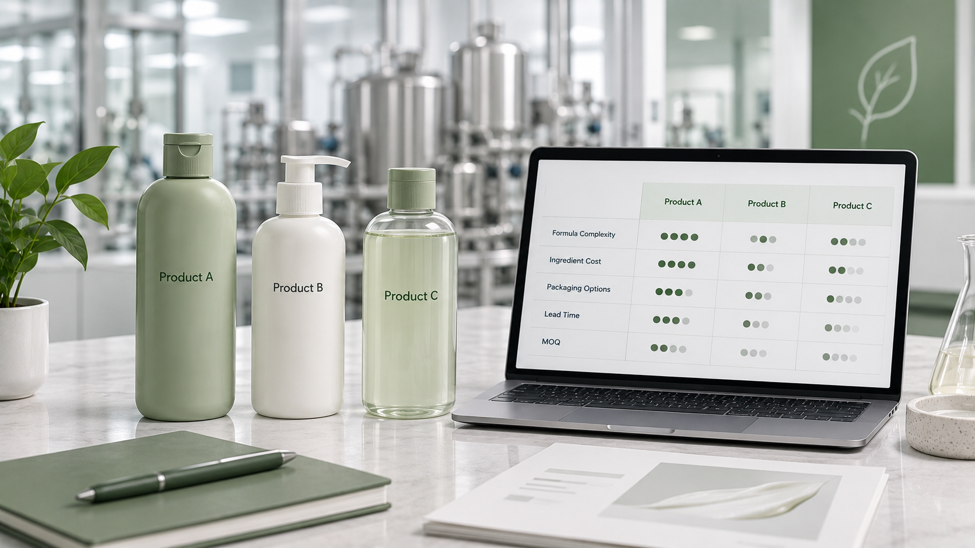
The framework below is therefore designed to help you compare scope, not assign a fixed percentage to each factor:
| Cost Driver | Why It Can Change the Quotation | What the Buyer Should Compare |
| Formula / Material System | Stock, modified, and custom formulas can involve different development and material requirements. Similar ingredient lists may also have different inclusion levels. | Formula scope, material requirements, and whether the formula is stock, modified, or custom |
| Packaging | Different formats and components create different material and sourcing requirements. | Bottle, closure/pump, size, and other packaging specifications |
| Printing / Decoration | Customized printing, labeling, and finishing can add to packaging costs. | Label, printing, decoration, and finishing requirements |
| MOQ | Production quantity and packaging minimums can affect project economics. | Order quantity and packaging MOQ |
| SKU Count | Multiple variants can increase purchasing, inventory, and production requirements. | Number of variants, sizes, fragrances, or other SKUs |
| Testing / Certification | Additional testing or documentation can expand the project scope. | Required tests, certifications, and documentation |
| Special Production Requirements | Project-specific requirements can involve additional production work or complexity. | Requirements that differ from the manufacturer’s standard process |
The goal is not to find the cheapest cost driver or determine which supplier has allocated the lowest amount to each category. Use the framework to check whether the two quotations are actually describing the same project.
Overlooked Differences That Can Change Two Apparently Similar Quotes
Even when two quotations appear to cover the same conditioner, smaller differences in the project scope can change the final numbers, starting with the ingredient inclusion levels covered above, and extending to a few other details that are easy to miss if you compare only the product name, unit price, and MOQ:
- SKU count and raw-material stocking: Multiple fragrances, sizes, or variants require additional purchasing and inventory, even within the same conditioner range.
- Packaging MOQ: Packaging suppliers may have their own minimums, affecting the economics of smaller runs.
- Logistics: The quoted unit price doesn’t necessarily represent your final landed cost. Freight, duties, and other delivery-related expenses may sit outside the manufacturing quotation. Before comparing two prices, confirm the quotation basis (e.g. EXW, FOB) each supplier used. A lower number quoted on a different Incoterm is not actually a lower price.
These differences are why private label conditioner cost should be evaluated against the full project scope, not just the headline unit price.
How to Compare Two OEM Conditioner Quotations
When two quotations land side by side, resist comparing the final numbers before checking whether both suppliers priced the same project. Run through this before you decide:
- Formula scope: same formulation type (stock/modified/custom) and material specs?
- Product size: same fill volume?
- Packaging: same bottle, closure/pump, label, and carton components?
- SKU count: same number of variants, fragrances, or sizes?
- MOQ: same order quantity and packaging minimums?
- Testing/certification: same requirements and documentation included?
- Special requirements: does either quote account for something the other doesn’t?
- Quotation basis: same Incoterm, and clear on what’s included vs. excluded?
If any of these differ, the two prices aren’t actually comparable yet. The goal isn’t proving one supplier cheaper, it’s confirming you’re pricing the same project.
Prepare the Right Information Before Requesting an OEM Quotation
Your hair conditioner manufacturer cannot prepare a meaningful conditioner OEM quotation from a request as broad as “I need private-label conditioner.” The more clearly you define the project, the easier it is for the manufacturer to understand what needs to be sourced, developed, tested, and produced.
Before requesting a quotation, prepare:
- Expected quantity: State how many units you expect to order.
- Product size: Specify the fill volume or product capacity you need.
- Number of SKUs: Include the number of variants, fragrances, or sizes.
- Formulation direction: Explain whether you need a stock, modified, or custom formulation and the product experience you want.
- Packaging requirements: Provide your preferred format, size, components, and any customization requirements.
- Target market: Identify where the product will be sold so applicable market requirements can be considered.
- Testing or certification requirements: Mention any specific requirements you already know apply to your project.
- Artwork status: Indicate whether your packaging artwork is ready, in development, or not yet started.
- Required timeline: Share your target production or launch date.
These details give the manufacturer a clearer picture of the project and help produce a private label conditioner cost that reflects your actual requirements rather than an incomplete estimate.
Frequently Asked Questions
Why do two private-label conditioner quotations differ so much?
Two private-label conditioner quotations can differ because the manufacturers may be pricing different project requirements, even when the finished products appear similar. Differences in formulation, material quantities, packaging, order quantity, SKU count, testing, certification, or production requirements can all change the final quotation.
What usually affects private-label conditioner pricing?
Private-label conditioner pricing can be influenced by the formulation and material system, packaging, printing and decoration, MOQ, SKU count, testing and certification, and any production requirements that fall outside the manufacturer’s standard process. The effect of each factor depends on the specific project.
How does MOQ affect conditioner OEM pricing?
The quantity you order can affect the economics of producing your conditioner. In addition, packaging components such as bottles, pumps, labels, or cartons may have their own minimum-order requirements. As a result, a smaller production run can have different unit economics from a larger run, even when the conditioner itself is the same.
Why can two conditioners with similar ingredient lists have different costs?
An ingredient list tells you which ingredients are present, but not how much of each ingredient is used. Two conditioners can therefore contain many of the same ingredients while using different inclusion levels. Those differences can change the amount and cost of materials required for production.
Does packaging affect private-label conditioner cost?
Yes. Packaging can contribute significantly to the overall project quotation. The bottle or container, closure or pump, product size, label, carton, printing, decoration, and other customization requirements can all differ between projects and therefore affect the quoted cost.
What information should I provide when requesting a conditioner OEM quotation?
Give the manufacturer a clear picture of your expected quantity, product size, SKU count, formulation direction, packaging requirements, target market, and timeline. The fuller guide above walks through what each of these covers and why it matters for the quotation.
Is a lower OEM conditioner quotation always the better option?
No. A lower OEM conditioner price does not automatically mean better value, just as a higher quotation does not automatically indicate higher quality. First confirm that both manufacturers are quoting for the same formulation, product size, packaging, quantity, testing, and other project requirements. Only then can you make a meaningful comparison.
Develop Your Private-Label Conditioner with RuiqiGO
A good private label conditioner cost comparison starts with what sits behind the final number. Before choosing a supplier, make sure you are comparing equivalent formulation, packaging, quantity, SKU, testing, and production requirements rather than simply choosing the lowest quotation.
RuiqiGO works with brands on private-label conditioner manufacturing, helping turn product requirements into practical formulation, packaging, and commercial production plans. The goal is to develop products that meet the agreed requirements from development through production, rather than treating the quotation as an isolated number.
Ready to develop your private-label conditioner with a manufacturing partner that can work through the requirements with you?
Contact the RuiqiGO team to discuss your formulation, packaging, quantity, and production needs and get a quotation based on your actual project scope.