A toothpaste becomes retail-ready only when the formula, packaging, testing, labeling and market documentation have been reviewed as one commercial system.
A finished tube may look ready for sale, but buyers and brand owners still need to confirm several critical points: whether the formula meets the agreed specification, whether the tube and seal remain reliable during storage and transport, whether product claims are supported, and whether the label meets the requirements of the destination market.
Relative Dentin Abrasivity (RDA) testing and toothpaste-tube integrity testing can form part of this assessment. They do not, however, replace formula stability, microbiological controls, packaging compatibility, labeling review or the market-specific regulatory process.
This guide explains the principal checks that OEM buyers should discuss with a toothpaste manufacturer before approving commercial production and retail launch.
These controls should be evaluated within the wider toothpaste manufacturing process before the formula, tube specification and artwork are finalized.
Key Takeaways
- Retail readiness is market-specific. The same toothpaste formula and label may require different regulatory treatment in the United States, European Union, United Kingdom or another destination market.
- RDA is a laboratory measure of dentin abrasivity. The appropriate target should be defined according to formula design, product positioning, test method and intended claims.
- Tube quality should be assessed through agreed packaging specifications and appropriate integrity testing, which may include seal, leakage, compression, burst or compatibility checks.
- Stability, microbiological quality, formula specifications and packaging compatibility are normally more fundamental than any single certificate.
- The final documentation package should be defined by the product category, target market, customer agreement and regulatory route—not through a universal checklist applied to every toothpaste project.
Core Controls in the Toothpaste Manufacturing Process
Before commercial production begins, the brand and manufacturer should agree on the product specification, packaging system, testing scope and documentation responsibilities.
The principal control areas include:
- Formula specification
Define the ingredient system, active ingredients where applicable, target pH, appearance, flavor, texture, viscosity and other measurable acceptance criteria. - Raw-material control
Confirm supplier documentation, material identity, batch traceability, storage requirements and any market-specific restrictions. - Batch manufacturing
Establish the mixing sequence, vacuum or deaeration requirements, temperature controls, homogenization conditions and in-process inspection points. - Finished-product quality control
Confirm the agreed tests for appearance, odor, flavor, pH, viscosity, net content, microbiological quality and other formula-specific parameters. - Toothpaste tube and closure
Select the tube structure, shoulder, cap, barrier properties, decoration and sealing system according to the formula, filling line and distribution conditions. - Filling and coding
Confirm fill-weight tolerances, seal condition, batch coding, cap application and rejection procedures. - Stability and compatibility
Evaluate whether the formula remains acceptable in the selected tube and closure system throughout the intended shelf-life program. - Label and artwork review
Confirm ingredient declaration, nominal content, responsible commercial entity, country-of-origin information where required, warnings, directions and supported product claims. - Commercial documentation
Define which specifications, reports, certificates or declarations will be supplied before production, after production or through the target-market regulatory process.
The required scope should be confirmed in the quotation or quality agreement. Not every toothpaste project requires the same reports, and not every document is generated before a purchase order or commercial batch exists.
RDA Testing: What It Measures and How Buyers Should Use It
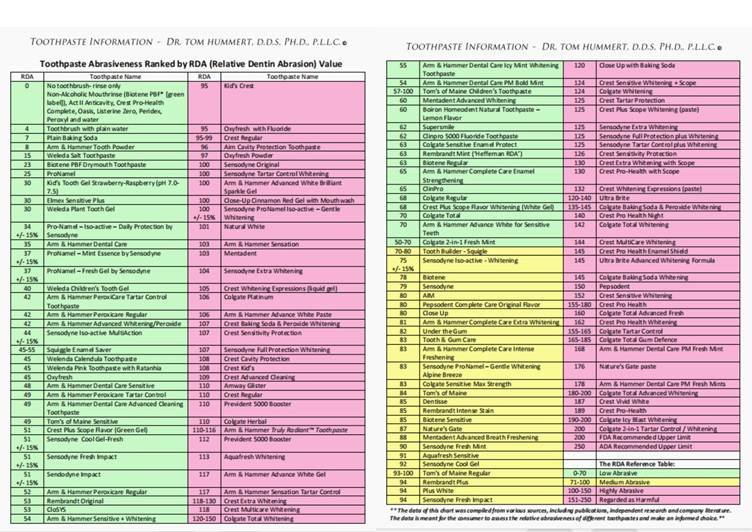
Relative Dentin Abrasivity (RDA) is a laboratory measurement used to compare the abrasivity of a dentifrice against a reference material under a defined test method.
RDA does not by itself determine whether a toothpaste is high quality, safe, whitening, sensitive-care or suitable for a particular claim. The result must be interpreted together with the formula, abrasive system, intended use, consumer instructions and target-market requirements.
When RDA Testing May Be Relevant
RDA testing may be considered when:
- The formula uses a new or modified abrasive system
- The product is positioned around low-abrasion or sensitivity care
- A whitening formula requires an agreed abrasivity target
- A retailer, distributor or customer requests third-party data
- Formula changes could materially alter cleaning or abrasivity performance
- The agreed product specification includes an RDA acceptance criterion
What Buyers Should Confirm
Before requesting the test, the brand and manufacturer should confirm:
- The formula version being tested
- The test laboratory and method
- The sample-preparation requirements
- Whether the test is comparative or tied to a contractual limit
- Who will bear the testing cost
- Whether repeat testing is required after material or formula changes
- How the result may be used in claims or retailer submissions
Avoid Universal RDA Marketing Categories
RDA results are frequently presented online through simplified “low,” “medium” and “high” tables. These charts may be useful for general education, but they should not be treated as universal legal classifications.
For an OEM project, the better approach is to define a target range during formulation, verify it through an appropriate method when commercially required, and ensure that any product claim accurately reflects the supporting evidence.
ISO 11609 provides requirements and guidance for the physical and chemical properties, testing, marking, labeling and packaging of dentifrices. The applicable edition, laboratory method and customer specification should be confirmed for each project.
Toothpaste Tube Integrity Testing: What It Should Verify
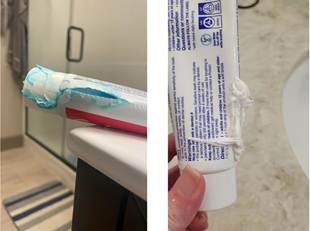
The toothpaste tube is part of the finished-product system. Its material, shoulder, cap, decoration and bottom seal must remain compatible with the formula and the intended filling, storage and distribution conditions.
A tube-integrity program may include different checks depending on the packaging specification and customer requirements.
Common Tube and Seal Checks
- Visual inspection
Checks the tube body, printing, shoulder, cap and bottom seal for obvious defects. - Leakage testing
Evaluates whether the filled tube leaks through the seal, shoulder, neck or closure under defined conditions. - Seal-strength testing
Assesses whether the bottom seal meets the agreed packaging specification. - Burst or pressure testing
Applies controlled pressure to evaluate the resistance of the tube and seal. The test method and acceptance threshold should be agreed with the tube supplier or customer. - Compression or load testing
Examines how the filled package performs under handling, carton stacking or other simulated distribution pressure. - Compatibility testing
Evaluates whether the toothpaste formula affects the laminate, plastic, aluminum layer, inks, adhesives, shoulder or closure over time. - Transport or distribution testing
May be used when the finished product, carton configuration or sales channel creates additional handling risk.
A burst test is not a universal legal certificate required for every toothpaste SKU. It is one possible packaging-control method. The appropriate test scope depends on the tube structure, filling process, customer specification, distribution route and level of commercial risk.
A satisfactory result means that the tested sample meets the predefined method and acceptance criteria. It does not prove that every future production unit will perform identically, which is why incoming packaging control, line inspection and finished-product sampling remain necessary.
Burst pressure testing can be done in different ways, including:
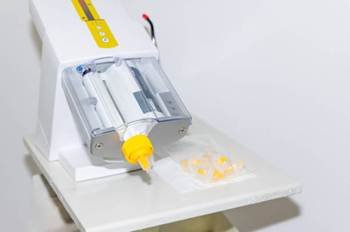
- Burst threshold test: The pressure inside the tube is continuously and uniformly increased until it fails (bursts).
- Hold or creep test: Sustained pressure is applied to the tube to see if it fails after a set duration.
- Creep test to failure: A constant internal pressure is held until the tube eventually bursts.
- Combination tests: The tube is held at a set pressure for a short time, then increased until the tube bursts.
The pressure medium can be:
- Pneumatic pressure: The tube is continuously inflated with air until it fails (bursts).
- Hydrostatic pressure: A liquid (eg, water) is pressurized in the tube until it bursts the tube.
A retail-ready toothpaste tube should have peel and seal strengths that meet supplier-agreed thresholds. The seal/peel strength tests measure the strength of the toothpaste lid/seal. It should also not leak during the storage or hold period.
This test is so important, that an EU retailer rejected 18,000 toothpaste units because the tube seal failed under drop test. Packaging failure is also one of the leading causes of Amazon negative feedback, and you definitely don’t want your brand name on those reviews.
Send us a request to get a sample burst-test report for your toothpaste tubes.
OEM takeaway
Before approving bulk tube production, confirm the tube specification, sealing method, test protocol, acceptance criteria, sample size and responsibility for corrective action if the packaging fails.
How Toothpaste Labeling Changes by Target Market
Toothpaste labeling cannot be finalized through one global checklist. The required information depends on the destination market, formula, active ingredients, intended claims and regulatory category.
United States
In the United States, a toothpaste intended only to cleanse or freshen may be regulated differently from a fluoride or anticaries toothpaste. Products containing fluoride or making anticaries claims commonly fall under both cosmetic and OTC drug requirements.
The final label may therefore need to address:
- Product identity
- Net contents
- Ingredient information
- Drug Facts and active-ingredient information where applicable
- Approved uses and directions where applicable
- Required warnings
- Responsible company or distributor details
- Batch or traceability information
- Claims consistent with the applicable regulatory category
The exact label should be reviewed against the final formula and intended claims rather than copied from a generic toothpaste template.
European Union
Toothpaste marketed as a cosmetic product in the European Union generally requires an EU Responsible Person, a Product Information File, a Cosmetic Product Safety Report and CPNP notification before market placement.
Labeling should be reviewed for items such as:
- Responsible Person name and address
- Nominal content
- Minimum durability or period-after-opening information, where applicable
- Precautions for use
- Batch identification
- Product function where not otherwise clear
- Ingredient declaration using the applicable cosmetic ingredient names
- Country of origin for imported products where required
- Claims supported by suitable evidence
EU cosmetic toothpaste does not require CE marking.
Other Markets
The United Kingdom, Middle East, Australia, Canada and other destinations have their own responsible-entity, notification, ingredient, language, claims and labeling requirements.
The importer or brand owner should confirm the final market route before artwork approval. Translation alone does not make a label compliant.
Common artwork risks include:
- Unsupported whitening, sensitivity, gum-health or therapeutic claims
- Incorrect active-ingredient presentation
- Missing responsible commercial entity
- Incorrect ingredient names or order
- Missing mandatory warnings
- Incorrect nominal content
- Country-of-origin or importer information errors
- Artwork approved before the final formula and market route are confirmed
A QR code or website may provide supplementary information where permitted, but it should not be assumed to replace information that must legally appear on the container or outer packaging.
Technical and Regulatory Documentation for a Retail-Ready Toothpaste
The documentation package should be defined according to the target market, product category, customer requirements and stage of the project.
A practical toothpaste file may contain some of the following:
| Document | Purpose | Availability |
|---|---|---|
| Approved product specification | Defines formula and finished-product criteria | After formula approval |
| Ingredient declaration | Supports artwork and regulatory review | According to disclosure stage |
| Raw-material documentation | Supports identity and supplier control | As agreed |
| Batch COA | Records agreed finished-product results | After commercial production |
| SDS, where applicable | Communicates relevant handling or safety information | According to product and market |
| Stability or compatibility summary | Supports shelf-life and packaging assessment | According to development program |
| Microbiological results | Confirms agreed microbiological criteria | According to batch or test program |
| RDA report | Supports abrasivity evaluation where required | If commissioned |
| Tube-integrity results | Supports packaging approval where required | If included in the test plan |
| Manufacturing certification | Demonstrates applicable quality system | Existing factory documentation |
| Artwork approval record | Confirms approved label version | Before packaging production |
| Market regulatory file | Supports legal placement in target market | Managed according to market route |
Not all documents are available at the inquiry stage. Batch-specific COAs, release records and some finished-product reports are generated only after a commercial order or production batch exists.
Likewise, an SDS does not replace a cosmetic safety assessment, Product Information File, Drug Facts review or other target-market regulatory documentation.
The key regulatory standards to reference include:
- USA: FDA standards on cosmetics/over-the-counter drug use.
- EU: CE/market access requirements and safety standards.
- International: ISO standards (e.g., ISO 11609, ISO 9001) and third-party test labs (SGS).
How Buyers Should Define the Documentation Scope
Before issuing a purchase order, the buyer and manufacturer should document:
- The target market and intended product category
- Formula and packaging acceptance criteria
- Required third-party tests
- Responsibility for testing fees
- Required documents before artwork approval
- Required documents before production release
- Batch documents supplied after production
- Regulatory responsibilities of the manufacturer, brand owner, importer and Responsible Person
- Procedures for non-conforming results or packaging failure
This prevents the common problem of requesting documents after the formula, artwork and production schedule have already been finalized.
Why Formula Control Matters to Retail Approval
A toothpaste formula determines much more than flavor and appearance. It influences cleaning performance, abrasivity, viscosity, stability, microbiological control, packaging compatibility, claims and manufacturing cost.
For procurement teams, the formula specification should translate the product concept into measurable acceptance criteria.
These may include:
- Appearance and color
- Flavor and odor
- pH range
- Viscosity or flow characteristics
- Active-ingredient level where applicable
- Abrasivity target where commercially required
- Microbiological limits
- Net-content tolerance
- Stability endpoints
- Packaging compatibility
- Claim-support requirements
Formula changes can affect the RDA result, tube compatibility, stability program, ingredient declaration and product claims. For this reason, the final commercial formula should be frozen before artwork and bulk packaging are approved.
Business Implications
- Product positioning
The formula must support the intended whitening, sensitivity, fresh-breath or general-cleaning position without creating unsupported claims. - Cost structure
Specialty actives, flavor systems, abrasives, testing and premium packaging affect the final unit price. - Development timeline
A new formula normally requires more evaluation than an established platform formula. - Market route
Ingredients, actives and claims may change how the toothpaste is regulated in the destination market. - Repeatability
Clear specifications help the manufacturer maintain batch consistency and define corrective actions when results fall outside the agreed range.
Quality control checklist
- Define measurable acceptance criteria in the spec: RDA target, pH range, viscosity, microbial limits, preservative efficacy, and shelf-life endpoints.
- Ask your toothpaste manufacturer to define the required batch documents, testing scope, acceptance criteria and sample-retention responsibilities before production.
- Set sampling plans, acceptance thresholds, and contract remedies (in case of rework, credit, rejection).
- Ensure label claims match test data and ingredient concentrations.
Practical next steps for procurement
- Include QC acceptance criteria in RFQs.
- Ask for supplier audit evidence and third-party lab reports.
- Factor testing and sample runs into cost models.
Clear toothpaste formulation control reduces listing risk, protects margins and preserves brand reputation.
For private label projects that need market-specific formulation and compliance documentation, production runs through ORALABX, RuiqiGO’s dedicated oral care manufacturing division. See the ORALABX toothpaste production page.
Conclusion
Retail-ready toothpaste is not defined by one RDA number, one tube burst result or one compliance certificate.
A commercially prepared product requires an approved formula specification, a compatible tube and closure system, suitable stability and microbiological controls, accurate market-specific labeling and a clearly defined documentation package.
RDA testing may support abrasivity evaluation where required. Tube-integrity testing may support packaging approval. Both should form part of a wider quality and regulatory process rather than being treated as universal standalone certificates.
Before approving bulk production, brands should confirm:
- The final formula and measurable acceptance criteria
- The tube, cap and sealing specification
- The agreed stability and compatibility scope
- Any required third-party testing
- The target-market regulatory route
- Artwork and claims responsibility
- Batch documents supplied after production
- Procedures for handling non-conforming results
Planning a private label toothpaste project? Explore ORALABX’s Toothpaste Manufacturing capabilities for formula development, packaging coordination, testing planning and commercial OEM production.
FAQ
- What does RDA measure in toothpaste?
Relative Dentin Abrasivity measures the abrasivity of a dentifrice against a reference material under a defined laboratory method. It is one formula-performance indicator and should be interpreted together with the intended use, abrasive system, claims and applicable specification.
- Does every private label toothpaste require an RDA report?
No. An RDA report may be requested for low-abrasion, whitening, sensitivity or retailer-specific projects, but it is not automatically required for every toothpaste SKU. The testing scope should be agreed during development.
- Is a tube burst test legally required for every toothpaste?
No. Burst or pressure testing is one possible packaging-integrity method. The appropriate checks depend on the tube material, seal design, customer specification, filling process and distribution risk.
- What packaging tests may be used for toothpaste tubes?
Depending on the project, testing may include visual inspection, leakage, seal strength, burst or pressure resistance, compression, formula-packaging compatibility and finished-product transport evaluation.
- Is fluoride toothpaste regulated the same way in the US and EU?
No. In the United States, fluoride or anticaries toothpaste commonly falls under both cosmetic and OTC drug requirements. In the European Union, toothpaste is generally handled through the cosmetic regulatory framework, subject to the final formula and claims.
- What documents should a toothpaste manufacturer provide?
The required package varies by project. It may include an approved product specification, ingredient declaration, relevant factory certificates, stability or compatibility information, batch COA, microbiological results, artwork approval and any third-party reports specifically commissioned for the SKU.
- Can brands reuse old test reports?
Yes, they can. Brands can reuse old test reports if the report covers the same formula, same production site and line, identical packaging, and is recent enough per retailer/regulator requirements. If the formulation, supplier, process, tube material, or a significant time (>12–24 months) has passed, a retest is required.
- Who pays for testing?
Typically, the brand (buyer) pays for the initial R&D and pre-production testing and manufacturers often include routine batch QC in unit costs. However, you can negotiate test responsibilities and cost-sharing in the contract and clarify who pays for failure re-tests or third-party verification.
- HDPE tube vs laminate tube – which is more “retail-safe”?
Laminate and multi-layer tubes are generally stronger, hence they have a better burst/seal performance and are more “retail-safe”. HDPE tubes are robust and recyclable, but offer a lower barrier and different sealing behaviour. Your ideal packaging material also depends on the compatibility testing and retail requirements.