The benefits, trends, and OEM/ODM opportunities for new oral-care brands.
A while back, all you could find in the mouthwash section were alcohol-based mouthwashes. And because of the limited selection, people had to endure the sting and sometimes the dryness that a swish of an alcohol-based mouthwash would leave. A 2024 study highlights that the use of alcohol mouthwash can change the oral microbiome, possibly causing several diseases (including oral cancer).
Now, in 2025, the selection of mouthwashes has expanded to include alcohol-free, fluoride-free & gentle mouthwashes, among others. And the mouthwash trends in the USA/UK/Australia have embraced this change. The shift raises an obvious question: what changed?
Is it the benefits, convenience, health-conscious choices, or something else? Let’s find out.
Why Consumers in the US, UK & Australia Are Shifting to Alcohol-Free Mouthwash
Alcohol-based mouthwash solves one problem while creating another. For example, alcohol kills bacteria, but research shows it kills both good and bad bacteria. Those concerns pushed many buyers toward gentler alternatives. The manufacturers followed suit by reworking formulas to make these rinses fit the markets. This shift has been favored by the following:
Lifestyle changes, reduced smoking & oral health awareness
Some smokers historically used alcohol-based mouthwashes to mask tobacco smell, a habit linked to higher oral cancer risk as confirmed in a 2024 study. As smoking rates fall, these harsher formulas lose relevance for that audience. Dental aesthetics also joins this chat to support the shift to natural mouthwash lines.
Dental aesthetics and long-term microbiome concerns
Dental professionals we speak with consistently point to increased patient demand for whitening and sensitivity solutions that do not disrupt long-term oral balance.
How DTC Brands and Social Media Accelerated Alcohol-Free Mouthwash Adoption
DTC (Direct-to-consumer) brands moved quickly once demand shifted, using speed and storytelling to outpace legacy players. The elements they employ in these campaigns include:
Ingredient Transparency and Clean-Label Storytelling
Buyers expect ingredient lists to match real-world results, and many actively verify claims through reviews, third-party testing, or professional recommendations.
TikTok, before-and-after challenges, and trust building
TikTok influencers, sometimes in collaboration with these brands, tailor campaigns like before-and-after challenges to increase reach. In one trend that could be termed “skinifying oral health,” creators take viewers through a series of steps (and products) they use for oral care. This inevitably pushed the mouthwash trends USA/UK/ Australia discussions further.
What Is Alcohol-Free Mouthwash and Is It Effective for Daily Use?
Alcohol-free mouthwashes contain 0% alcohol.
How alcohol-free mouthwash works without ethanol
Traditionally, alcohol was the solvent used to dissolve essential oils, and it also added an antimicrobial punch, killing germs. Alcohol-free mouthwash contains other antimicrobials with similar benefits. Examples include cetylpyridinium chloride, essential oils, or fluoride. These are just as effective with a gentler touch.
Traditional alcohol mouthwash vs modern alcohol-free versions
To fully grasp how conventional and contemporary alcohol-free mouthwashes differ, here is a table that gives a clear comparison:
| Point of Comparison | Traditional Alcohol Mouthwash | Modern Alcohol-Free Mouthwash |
| Antibacterial Function | Effective but relies heavily on alcohol, which delivers an intense burn. | Uses gentler antibacterial systems. |
| Irritation & Dryness | Causes dryness quickly; many users report irritation. | Reduces irritation and helps retain moisture. |
| Suitability for Daily Use | Not ideal for long-term or frequent use due to discomfort and dryness. | Suitable for daily, long-term routines thanks to milder ingredients and balanced moisture levels. |
| Product Evolution & Options | Limited to alcohol-based formulas with few alternatives. | Opened the door to fluoride-free & gentle mouthwash, sensitive mouthwash, and cleaner formulations. |
| Manufacturing & Brand Opportunities | Traditional formulas offered less flexibility for evolving consumer needs. | Private-label, OEM, and ODM mouthwash programs. |
What Mouthwash Claims Sell Best in the US, UK & Australia
In the US, UK, and Australia, buyers want proof that a rinse works without irritating later. With that, this is what’s trending:
“Gentle care” and sensitivity positioning
“Gentle care” and sensitivity claims always appear in best-selling products. Why? That’s because they promise users to eliminate the harsh effects brought about by alcohol and other ingredients.
Natural flavors, dentist-approved & safety claims
On Amazon, shoppers often filter reviews specifically for taste, irritation, and long-term comfort, while DTC buyers tend to respond more strongly to dentist-approved positioning and clear ingredient sourcing.
Why Natural & Plant-Based Mouthwash Is One of the Fastest-Growing Segments
Ingredient scrutiny has become routine, and natural mouthwash benefits directly from that shift. Here’s why:
Clean-label formulations and ingredient avoidance
Buyers across America, the UK, and Australia go for the ingredient list. And to be specific, clean-label formulations. Consumers stop and read labels closely, even looking for standard certifications and licensing. Fluoride-free & gentle mouthwash and options that support a sensitive mouthwash experience without unnecessary ingredients lead in this regard.
Botanical ingredients consumers actively look for
We mentioned that people are drawn to fresh scents like mint. But that’s just the top of the list of preferred herbal/plant-based mouthwash ingredients. The rest include:
- Tea tree oil for its fresh, grounding profile
- Aloe vera for its soothing effect
- Coconut oil for antimicrobial properties
- Xylitol as a cavity-friendly sweetener
- Other herbal extracts.
Why “natural” and “organic” claims improve CTR and conversion
When a brand positions itself using eco-friendly claims like “organic,” “botanical blend,” and “cruelty-free”, it resonates with consumers who want products aligned with sustainability and wellness trends. The result? High CTR and conversion rates.
The transparency in test and quality results, and other operational elements, adds credibility to these claims. For instance, for a “cruelty-free” claim, certifications from third‑party certifiers (Leaping Bunny or PETA) work.
Mouthwash Market Trends in the US, UK & Australia (2025–2030)
Over the next five years, oral-care purchases are likely to favor products that balance cost with measurable therapeutic value. Below is why:
Alcohol-free formulas dominate new launches
Buyers’ go-to formulas have become specialised oral care kits with alcohol-free mouthwash. These versions offer the same (if not more) benefits to the traditional ones, minus the burn.
Sensitive & gum-care mouthwash demand
The demand for sensitive mouthwashes that also double down as effective gum care remedies is high. This trend also incorporates formulas that reduce enamel wear and improve overall oral comfort.
Kids’ oral care and mild formulations
Parents are always on the lookout for rinses that feel mild, taste pleasant, and skip unnecessary additives. Natural flavors and simplified ingredient lists make natural mouthwash an appealing choice for this audience niche.
Gentle whitening mouthwash
The emphasis here is on “gentle” whitening products because very intense formulas can be harmful when used daily. Here, plant-based whitening blends and mineral support, low-irritation formulas fit naturally.
Eco-friendly packaging and sustainability
OEM manufacturers typically see Amazon and DTC brands choosing PCR plastics or sugarcane-based bottles to improve listing differentiation and reduce packaging objections during comparison shopping.
Key Mouthwash Ingredients Buyers Expect in Modern Formulas
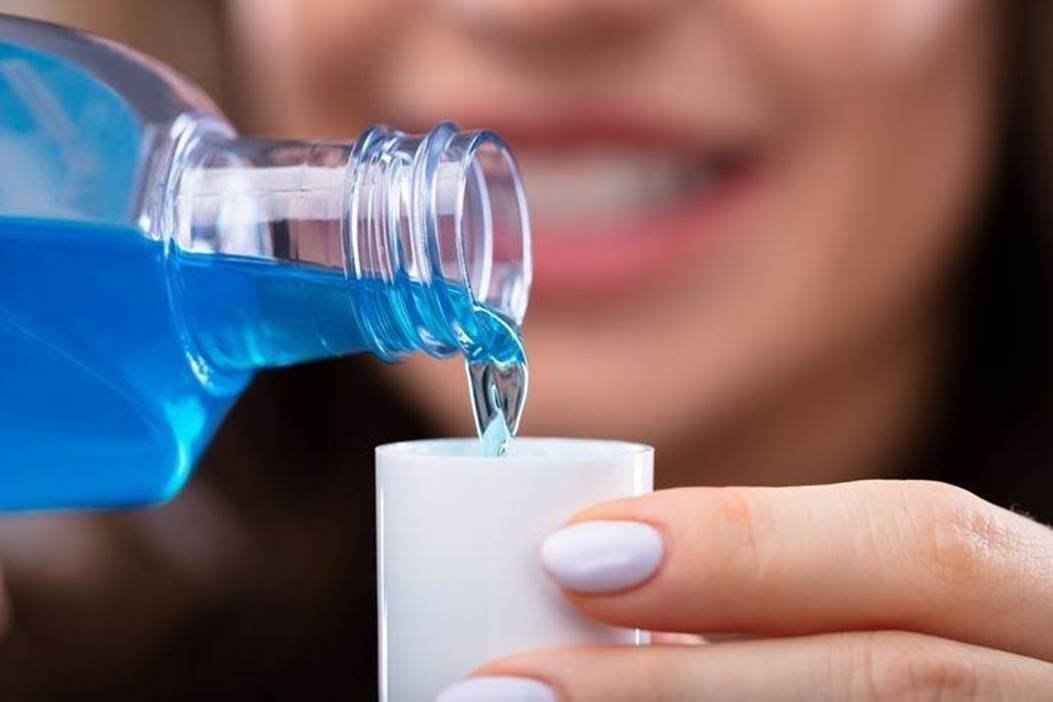
These shifts shape how modern mouthwash formulas are built, from ingredient selection to claim positioning. Below is what consumers are after:
Hydroxyapatite (HAP) for enamel support
HAP acts similarly to our own teeth’s enamel, and through that, it supports its smoothness and surface strength.
Xylitol as a cavity-friendly sweetener
Xylitol is a calorie-free sweetener that steps in to fight cavity-causing bacteria while still offering a naturally cooling sensation. Kids and adults alike like the lightly sweet taste of Xylitol mouthwash.
CPC & Zinc as alcohol alternatives
In place of alcohol, CPC and Zinc are taking over. Even though they do the same job, this pair is milder for daily use. These ingredients freshen and support clean breath without the burn.
Essential oils & botanical blends
Want your kids never to skip the rinse? Get them one with a pleasant flavor. While peppermint and spearmint remain the classics, more people are willing to shop for more botanical blends.
Fluoride-free and mineral-based options
Consumers who want flexibility in their oral care routines choose fluoride-free formulas that support minerals or gentle strengthening agents. Parents also choose these selections to ensure their kids have stronger teeth as they age.
Why Oral-Care Brands Choose OEM / Private Label Mouthwash Manufacturing
Efficiency remains the main reason brands turn to OEM and private-label manufacturing. With competition always on the horizon, partnering with an experienced mouthwash manufacturer becomes an advantage. More advantages include;
Lower cost vs in-house production
Setting up an independent production line is an investment-heavy task. And some companies do not even have that capital to begin with. OEM and ODM partners remove that burden, offering access to manufacturing affordably.
Faster time-to-market (6–12 weeks)
OEM/ODM facilities can help brands launch new products in 6 to 12 weeks because they already have all systems running. In recent private-label launches, brands we work with have used this speed to test multiple variants before committing to national retail distribution.
Access to proven formulas (sensitive / whitening / kids)
Most manufacturing partners maintain a library of proven formulas, ranging from gentle, daily-use rinses to whitening, gum-care, or kids’ specific solutions. Brands can use these as-is or customize them to align with specific ingredient preferences.
Low MOQ, multi-flavor & custom packaging
Since most DTCs start small, OEM/OED manufacturers are the best source for inventory because they offer low minimum order quantities alongside flexibility in flavors, bottle shapes, and label design.
Launching multi-SKU mouthwash lines efficiently
A strong OEM and ODM partner makes it simple to introduce multiple variations under one brand umbrella. Many established OEM partners have supported multi-SKU mouthwash launches across Amazon, retail, and DTC channels.
How to Choose a Reliable OEM Mouthwash Manufacturer
Whichever mouthwash manufacturer you decide to partner with shapes everything, from formula integrity to testing to distribution. Here are a few guidelines that point you in the right direction.
GMP, ISO, MSDS, stability & allergen testing
When a product has certifications such as GMP and ISO, it indicates that the facility is operating in accordance with industry standards. These regulatory bodies set quality check benchmarks that brands use to ensure product integrity.
Alcohol-free & natural formulation capability
With the rise of specialized mouthwashes like sensitive mouthwash, brands need partners who can work with modern ingredient systems. The ability to develop clean-label, comfort-focused formulas is essential for competing in today’s market.
In-house R&D and sample development
A strong R&D team accelerates innovation. Whether a brand wants to tweak flavor profile or experiment with new ingredients, in-house chemists make it possible. Faster.
Packaging, labeling & compliance support
Most sellers don’t want to juggle multiple vendors for different packaging elements. And so, using OEM partners that handle packaging allows founders to focus on storytelling and launch strategy.
Export experience to the US, UK & Australia
Regulations differ across regions, so manufacturers with proven export experience help brands meet the requirements smoothly. This is especially important for Amazon sellers who must comply with platform-specific rules when shipping to these markets.
Case Study: How a Natural Mouthwash Brand Scaled After Reformulation
Hello Product, an American-based oral care company, introduced its alcohol‑free, fluoride‑free natural mouthwash line (using ingredients like aloe vera).After this, they saw rapid sales growth and expanded distribution into major retailers such as Target and Walmart.
Their positioning around “naturally friendly” oral care helped them capture eco‑conscious millennials and Gen Z buyers. The brand was later acquired by Colgate‑Palmolive in 2020 to scale globally.
Conclusion: Alcohol-Free & Natural Mouthwash Is a Long-Term Growth Category

Across recent OEM projects, alcohol-free and natural mouthwash lines continue to outperform traditional formulas in repeat purchase rates and line extensions. Health-focused consumers are actively avoiding harsh formulas, and the numbers back it up. The global natural mouthwash market is projected to reach USD 8.3 billion in 2025, signaling sustained demand rather than a short-term trend.
Why this segment keeps expanding
Modern shoppers expect oral-care products to feel gentle, ingredient-conscious, and easy to use every day. Alcohol-free and natural rinses check all three boxes, which explains their growing shelf space in pharmacies and online stores.
Why margins work in this category
Plant-based and sensitivity-focused mouthwashes support premium positioning without requiring complex manufacturing. Through private-label programs, brands can maintain healthy margins while keeping production costs predictable.
Why private label brands are well positioned
Retailers and DTC founders do not need to develop formulas from scratch. Proven alcohol-free and natural bases from experienced OEM and ODM partners make it possible to launch credible products quickly.
Why OEM/ODM matters right now
Speed matters in a fast-growing segment. OEM and ODM manufacturers offer ready-to-scale formulations, flexible customization, and manageable MOQs, making private-label mouthwash the most efficient path to capturing ongoing market growth.
Interested in Private Label / OEM Mouthwash?
Brands exploring alcohol-free, natural, whitening, or kids’ mouthwash lines often start by reviewing available formulations and production parameters. Ruiqi supports these evaluations for US, UK, and Australian partners through direct consultation and scalable manufacturing options.