Introduction
Packaging format decisions affect much more than the visible unit price. Bottle size, filling-line compatibility, printed-material minimums, leakage control, carton configuration, freight efficiency, and quality testing all influence the commercial cost of an oral care project.
Bottles, single-dose sachets, and oral sprays may deliver related products, but they use different packaging components and production systems. A format that works well for one order volume or sales channel may be commercially unsuitable for another.
This comparison explains how OEM buyers should evaluate the three formats based on manufacturing feasibility, minimum order quantity, packaging investment, logistics, and market use. The figures and conclusions for an actual project must still be confirmed through a formal quotation based on the final formula, pack size, artwork, and order volume.
These decisions should be evaluated within the wider oral care manufacturing process before artwork and packaging components are finalized.
Packaging Formats Overview for OEM Oral Care Projects
From an OEM perspective, packaging formats are not interchangeable containers. Each format depends on a different combination of filling equipment, packaging materials, component minimums, sealing methods, and quality-control requirements.
- Bottles
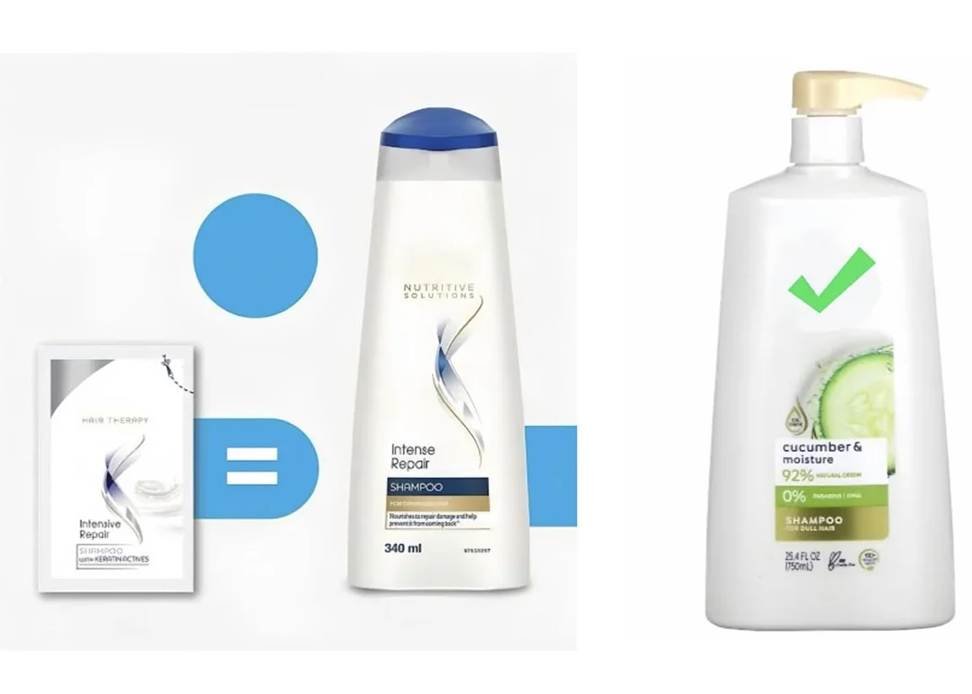
Bottle packaging is the most established format for standard retail mouthwash. It supports a wide range of fill volumes, label styles, closures, and cartons, and it is generally easier to source when an existing bottle and cap combination is used.
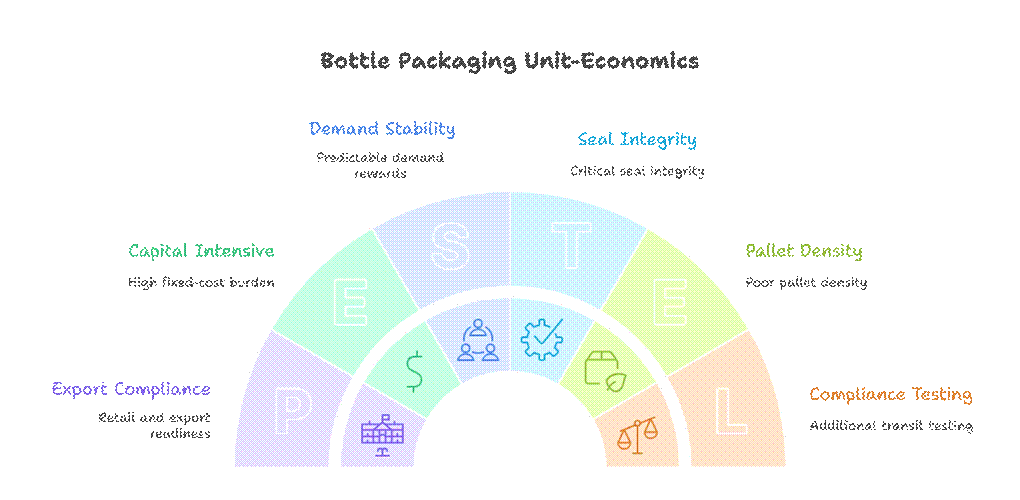
Its main commercial disadvantages are higher freight weight, greater carton volume, and the need to control closure and seal integrity during distribution.
- Single-dose sachets
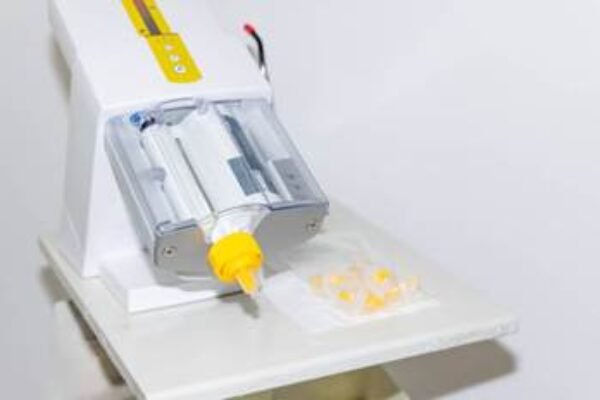
Single-dose sachets provide compact dosing and efficient freight density, but they require dedicated roll-film printing, form-fill-seal equipment, and sufficient production volume to operate the line efficiently.
They are therefore usually not the lowest-MOQ option. Printed-film minimums and production setup can make sachets more suitable for established sampling, travel, hospitality, or high-volume single-use programs than for a very small market test.
- Oral Sprays
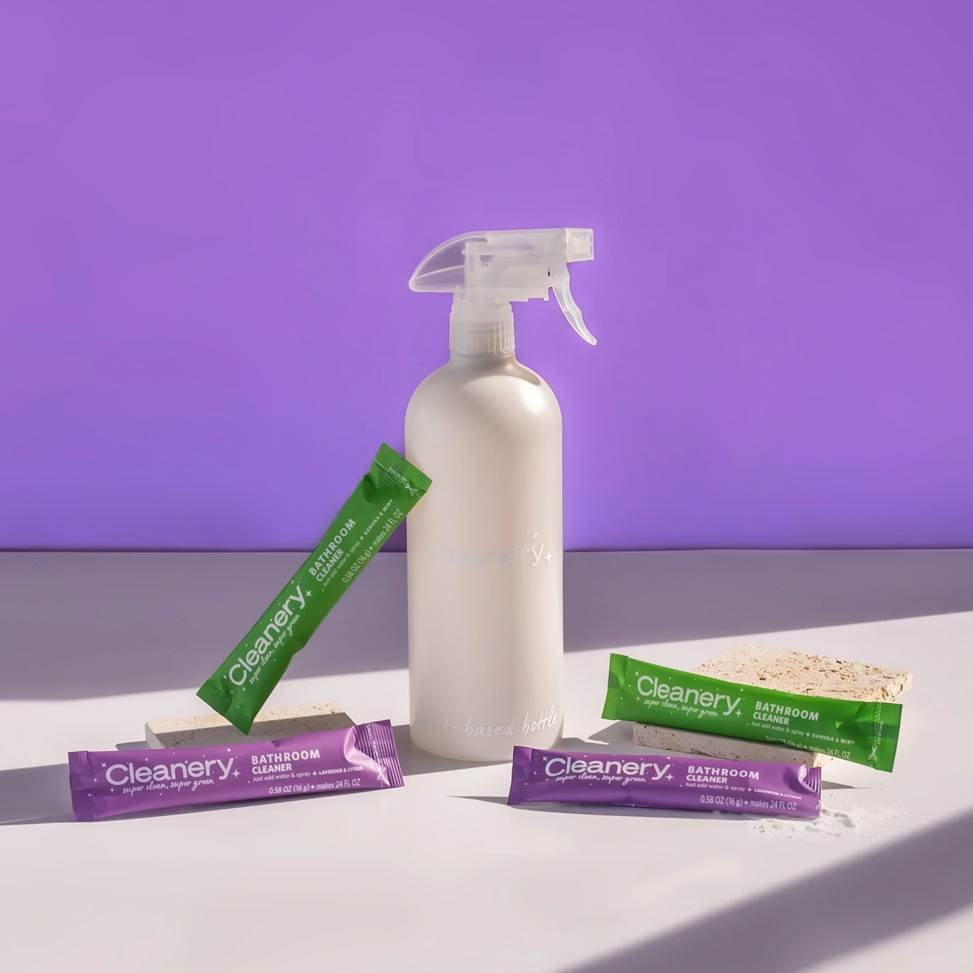
Oral sprays use compact bottles fitted with pumps, actuators, dip tubes, or spray-pen components. Their small fill volume can reduce liquid and freight weight, but the packaging system must deliver a consistent spray pattern and remain compatible with the formula.
Commercial risks include pump availability, component minimums, leakage, actuator consistency, and formula interaction with the closure system.
OEM framing:
The correct format depends on the product dose, target channel, available production line, packaging minimums, expected order volume, and acceptable upfront investment. Visual preference should be confirmed only after manufacturing feasibility has been checked.
Commercial Cost Framework Used in This Comparison
A reliable packaging comparison should not rely on component price alone. OEM buyers should evaluate the complete commercial system associated with each format.
Evaluation criteria include:
- Finished unit cost
The quoted production cost for the formula, primary packaging, filling, assembly, and agreed quality-control scope. - Cost per usable dose
The cost of the actual consumer dose rather than a direct comparison between packs with very different fill volumes. - Packaging minimums
The minimum quantities imposed by bottles, pumps, printed labels, cartons, roll film, printing cylinders, or other components. - Production-line requirements
The filling, sealing, coding, inspection, and line-setup requirements for the selected format. - Freight and carton efficiency
The influence of liquid weight, pack dimensions, carton density, leakage protection, and destination. - Inventory commitment
The amount of printed or customized packaging that may remain if sales forecasts change. - Development and validation requirements
Compatibility, leakage, sealing, filling, transport, and other tests required before commercial production.
Procurement takeaway:
A format with a lower material cost may still require a larger order, more customized packaging, or a different production line. The final decision should therefore be based on a project-specific quotation rather than a universal cost ranking.
OEM principle:
Unit economics must be modelled at 10k, 50k, and 100k units—and recalculated by geography (USA / UK / AU). Freight lanes, pallet standards, and retail transit rules materially change outcomes.
| Evaluation factor | Bottle | Single-dose sachet | Oral spray |
|---|---|---|---|
| Typical production route | Liquid filling and capping | Roll-film form-fill-seal line | Small-bottle or spray-pen filling |
| Commercial MOQ tendency | Usually moderate when existing components are used | Usually high because of film and line setup | Moderate; driven by bottle and pump components |
| Packaging customization | Label, bottle, cap and carton | Printed roll film and optional retail carton | Bottle/pen, pump, label and carton |
| Freight profile | Higher liquid weight and carton volume | High unit density and low dose weight | Compact, but component shape affects carton efficiency |
| Main technical control | Closure, seal and leakage | Seal integrity, dose accuracy and film compatibility | Pump compatibility, leakage and spray performance |
| Best-fit uses | Standard retail and family-size mouthwash | Travel, hospitality, sampling and single-dose programs | Breath freshening, portable oral mist and targeted use |
| Main commercial risk | Freight and customized component inventory | High packaging MOQ and line-economics requirement | Pump sourcing and formula-pack compatibility |
This comparison shows general manufacturing tendencies, not guaranteed prices or fixed MOQs. Final requirements depend on the selected packaging components, formula, artwork, and production line.
Bottle Packaging: Commercial Profile
Cost and MOQ structure
Bottle packaging can be commercially accessible when the project uses an existing bottle, cap, label format, and standard filling line.
The cost structure may include:
- Bottle and closure
- Label or direct printing
- Induction seal or liner where required
- Retail carton, if used
- Filling and capping
- Outer-carton packaging
Bottle packaging should not automatically be described as logistically inefficient. A well-designed bottle and carton system can perform reliably at both moderate and large order volumes.
For standard private label mouthwash, bottles may provide a lower entry threshold than custom printed single-dose sachets because the components can often be sourced from established packaging supply chains.
Logistics performance
Bottle mouthwash carries more liquid weight and occupies more carton space than single-dose formats. Freight cost therefore depends heavily on fill volume, bottle geometry, case-pack configuration, and destination.
Important controls include:
- Suitable carton strength
- Efficient bottle arrangement
- Closure and induction-seal integrity
- Leakage protection
- Accurate carton dimensions and gross weight
- Pallet or container loading efficiency
Bottle packaging should not automatically be described as logistically inefficient. A well-designed bottle and carton system can perform reliably at both moderate and large order volumes.
Procurement takeaway:
Bottles are generally the most practical starting point for a conventional retail mouthwash project when existing packaging is acceptable. They become less economical when the brand requires custom molds, elaborate decoration, or inefficient bottle dimensions.
Not sure how bottles, sachets, and sprays compare for your specific SKU, market, and volume? Request an OEM-built snapshot showing EXW ranges, freight math, and MOQ exposure at 10k / 50k / 100k units.
Single-Dose Sachet Packaging: Commercial Profile
Cost and MOQ structure
Single-dose sachets require roll film that is printed, formed, filled, and sealed on a dedicated packaging line.
The commercial structure may include:
- Printed laminate film
- Printing cylinders or plates
- Film setup and material minimums
- Filling and sealing
- Batch coding
- Retail carton or display packaging, if required
Although each sachet is lightweight, the project normally needs sufficient volume to justify the printed film and packaging-line setup. For RuiqiGO projects, commercial sachet programs are generally evaluated at approximately 100,000 units rather than as a low-quantity startup format.
Operational and Logistics Profile
Sachets provide excellent dose control, carton density, portability, and freight efficiency. They can be suitable for:
- Travel products
- Hospitality and airline programs
- Sampling campaigns
- Subscription kits
- Retail boxes containing multiple doses
- Institutional or professional distribution
However, brands must confirm sachet dimensions, fill volume, tear performance, seal integrity, formula-film compatibility, and retail-box configuration before artwork is finalized.
Commercial Risk
The main commercial risk is not freight. It is committing to printed film and a production quantity that may exceed the brand’s initial demand.
Artwork changes after printing can also create obsolete film inventory. For this reason, sachet projects require clearer demand planning than standard bottle projects.
Procurement takeaway
Sachets can provide strong per-dose logistics once volume is sufficient, but they should not be selected on the assumption that they offer the lowest MOQ. Their advantage appears in high-density, repeated single-dose use—not necessarily in small startup orders.
Oral Spray Packaging: Commercial Profile
Cost Structure
Sprays appear efficient due to compact size, but:
- Moderate MOQ requirements compared to bottles, but higher than sachet formats.
- More complex closure components (valves, pumps, actuators) increase unit cost and sourcing risk.
- Greater dependency on component consistency to maintain performance at scale.
Logistics Performance
- Compact size improves apparent space efficiency, but pressure sensitivity introduces transit risk.
- High failure cost if spray mechanisms leak or misfire, often requiring full-lot inspection or rework.
- Increased exposure during air freight and altitude changes.
Commercial & Compliance Impact
- Pressure, altitude, and valve testing are required before the retail or export scale.
- Higher regulatory scrutiny in certain markets due to mechanical and safety considerations.
- Longer validation timelines can delay launches and increase carrying costs.
Procurement takeaway:
Sprays can support differentiated, portable oral care products, but their feasibility depends more on pump and formula compatibility than on simple bottle size.
Micro Case: Where Unit Economics Looked Right — Until Scale
A DTC oral-care brand launched a whitening spray to capitalize on compact size and low perceived freight cost. At 15k units, unit economics looked favorable: lower carton count, reduced storage, and faster pick-and-pack.
At 60k units, problems emerged. Altitude changes during air freight caused intermittent valve leakage. Damage rates rose to ~4%. Retail partners rejected partial pallets, forcing rework and repacking. Additional pressure testing delayed replenishment by six weeks.
The correction came only after switching to reinforced valves, increasing test scope, and renegotiating MOQ staging. Unit cost increased slightly—but landed cost stabilized.
Lesson:
Sprays fail not because they are “bad,” but because their break-even volume is often misunderstood.
Comparative Unit-Economics Table (Core Visual)
Unit-Economics Comparison Matrix — Bottle vs Sachet vs Spray
| Decision variable | Bottle | Single-dose sachet | Oral spray |
|---|---|---|---|
| MOQ tendency | Moderate with existing components | High due to printed film and line setup | Moderate; depends on pump and bottle MOQ |
| Upfront customization | Low–high depending on bottle and decoration | Printing setup plus film commitment | Low–high depending on standard or custom pump package |
| Dose format | Multi-use | Pre-measured single dose | Multi-dose portable spray |
| Freight density | Moderate | High | Moderate–high |
| Main quality risk | Seal, closure and leakage | Film seal and dose consistency | Pump output, leakage and compatibility |
| Artwork-change exposure | Labels/cartons may be replaceable | Printed film inventory may become obsolete | Labels/cartons plus component inventory |
| Suitable channels | Retail, pharmacy, DTC, family use | Travel, hospitality, sampling, boxed dose programs | DTC, portable use, specialty retail |
| Typical launch fit | Conventional mouthwash hero SKU | Validated high-volume single-dose program | Breath spray or oral mist concept |
No format is universally cheaper. The correct comparison must use the same formula, dose, annual forecast, packaging specification, sales channel, and destination.
Which Format Fits Each Commercial Scenario?
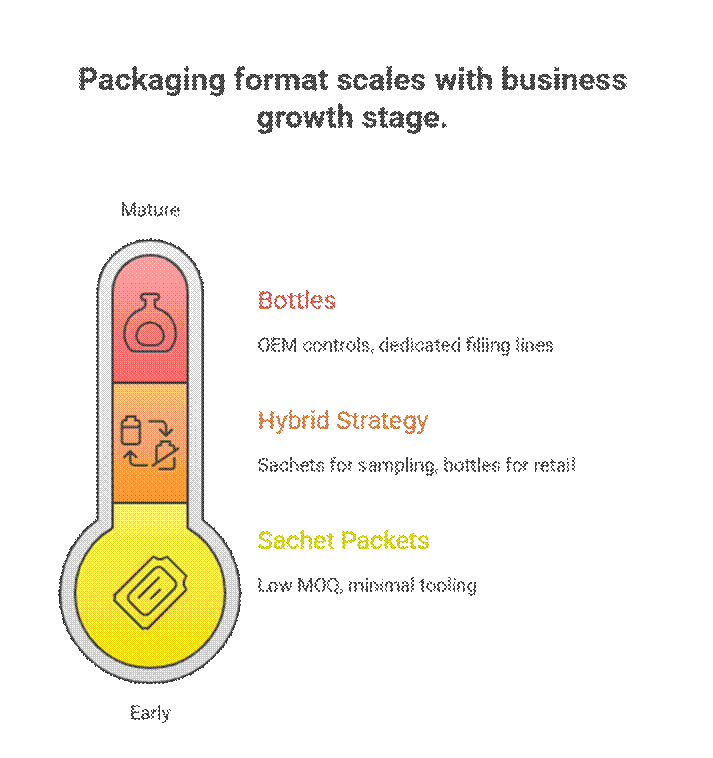
Early Scale (Pilot → 25k units)
Winner: Sachet packets
- Sachet packet advantage due to low MOQ thresholds and minimal tooling lock-in.
- Superior freight efficiency and pallet density reduce early landed-cost exposure.
- Lower leakage and write-off risk during demand validation.
Mid Scale (25k → 100k units)
Winner: Hybrid strategy
- The hybrid strategy (sachet + bottle) becomes optimal.
- Sachets support DTC, Amazon, travel, and sampling programs.
- Bottles are introduced selectively for retail testing once demand stabilizes.
Mature Scale (100k+ units)
Winner: Bottles (with controls)
- Bottles become viable with OEM controls in place.
- Dedicated filling lines, validated seals, and optimized carton density reduce risk.
- Economies of scale begin to offset higher MOQs and logistics complexity.
OEM takeaway:
The format should follow the product use case and a real production line—not an assumed growth-stage formula. MOQ, packaging investment, and logistics must be calculated separately for each format.
Scaling now or planning export expansion? Request an OEM-built MOQ and format a staging plan aligned to your demand curve, filling lines, and freight lanes.
Common Packaging Decisions Buyers Get Wrong
- Selecting a format before checking the production line
- A reference image does not confirm that a manufacturer can fill the same format. Buyers should verify line capability, fill volume, component availability, and sealing method first.
- Assuming sachets provide the lowest MOQ
- Sachets may provide efficient freight per dose, but printed film and line setup commonly require a much higher production quantity than standard bottles or oral sprays.
- Comparing unit price without normalizing the dose
- A 10 ml sachet, 10 ml spray, and 500 ml bottle serve different use patterns. Direct unit-price comparison is therefore misleading.
- Finalizing artwork before packaging feasibility
- Film size, label area, bottle dimensions, pump specifications, and carton configuration should be confirmed before artwork approval.
- Ignoring packaging-component minimums
- The filling MOQ and packaging MOQ may be different. A factory may be able to fill a quantity that the bottle, pump, film, or carton supplier cannot economically produce.
- Using a consumer package for an unsuitable channel
- Retail shelves, parcel delivery, hospitality, sampling, and travel programs impose different requirements. The format must match the actual sales and distribution route.
How OEM Packaging Evaluation Reduces Commercial Risk
A practical OEM packaging review begins with the target dose, market, sales channel, expected order volume, and production-line capability.
The manufacturer can then evaluate:
- Existing versus custom packaging
- Component and printing minimums
- Filling and sealing requirements
- Formula-packaging compatibility
- Quality-control and testing scope
- Carton configuration
- Estimated production quantity
- Available technical and export documentation
This process does not guarantee the lowest theoretical unit price. It helps the buyer identify a format that can actually be sourced, filled, tested, shipped, and repeated under commercial conditions.
Conclusion (OEM Authority Close)
Bottles, single-dose sachets, and oral sprays serve different product and channel requirements. They should not be ranked through a universal “cheapest format” formula.
For a conventional retail mouthwash launch, an existing bottle format may provide the most practical entry route. Sachets can deliver excellent dose control and freight density, but usually require substantially higher production volume because of printed film and line setup. Oral sprays support portable product concepts but depend on reliable pump and formula compatibility.
Before selecting a format, buyers should confirm the target dose, sales channel, packaging components, production-line capability, minimum order quantity, testing requirements, and destination.
Planning an oral care packaging project? Explore RuiqiGO’s Oral Care Manufacturing capabilities to review feasible product formats and the development path before committing to artwork or packaging inventory.
Frequently Asked Questions
Q1. Which oral care packaging format has the lowest MOQ?
There is no universal answer. Standard bottles and oral sprays may offer lower entry quantities when existing components are used. Custom printed single-dose sachets generally require higher volume because of roll-film and production-line minimums.
Q2. Are single-dose mouthwash sachets suitable for startup quantities?
They are usually more suitable for validated travel, hospitality, sampling, or high-volume dose programs than for a very small startup order. Buyers should confirm printed-film minimums and the packaging-line MOQ before selecting the format.
Q3. What is a typical MOQ for private label mouthwash bottles?
For RuiqiGO projects, standard private label mouthwash is generally evaluated from approximately 10,000 bottles per SKU. Final requirements depend on the formula, bottle, cap, label, carton, and production arrangement.
Q4. What is a typical MOQ for single-dose mouthwash sachets?
Commercial single-dose sachet projects are generally evaluated at approximately 100,000 units because of printed-film sourcing and production-line economics. The final MOQ depends on sachet size, film specification, printing, fill volume, and retail packaging.
Q5. What should be tested for an oral spray package?
Testing may include formula compatibility, leakage, pump output, spray pattern, priming, dip-tube fit, closure application, filled-product stability, and transport performance. The exact test scope depends on the selected package and target market.
Q6. Can one formula be packed in bottles, sachets, and sprays?
Not automatically. The viscosity, flavor system, active ingredients, dose, preservation system, and packaging materials may behave differently in each format. Formula and packaging compatibility should be reviewed separately.