Why Do Oral Care OEM Manufacturers Require High MOQs?
You find the right OEM supplier, receive a quotation, and everything looks acceptable until you reach one specific line:
MOQ: 10,000 units.
For many startup brands, that number feels unnecessarily high. It is easy to view this requirement as an arbitrary sales policy designed to shut out smaller businesses or maximize factory profits.
But in oral care manufacturing, an MOQ is usually not a sales policy. It is an operational boundary determined by production equipment limits, strict sanitation requirements, packaging supply chains, and formulation stability.
This article explains where those limits come from and how you can reduce MOQ requirements without increasing financial or operational risk.
What MOQ Actually Means on the Factory Floor
Most brand owners assume MOQs only exist to protect factory revenue. In reality, an MOQ is a practical break-even calculation.
Every production run incurs steep, fixed startup costs in time, labor, and material before a single retail unit is filled. To protect a brand’s retail margins, these fixed overhead costs must be distributed across a large enough volume.
Two main operational bottlenecks dominate these fixed startup expenses:
Line Purge and Startup Waste
High-speed automated filling lines require a calibration phase to prime pumps, stabilize internal pressure, and lock in accurate fill weights. This initial setup consumes and discards anywhere from 20kg to 50kg of liquid or paste formula before saleable production begins.
On a standard 5,000-unit run, losing 50kg of product is a manageable operational variance. On a 500-unit micro-batch, that identical waste represents a per-unit cost penalty that no retail price point can absorb.
The Sanitation Bottleneck
Between different product runs, standard FDA and ISO-aligned compliance protocols require a full deep clean and sanitization of every contact surface.
This rigorous turnaround requires 4 to 8 hours of skilled manual labor. Six hours of machinery downtime and labor costs the exact same whether the following run is 500 units or 50,000 units. Spreading that fixed labor bill across a micro-run pushes per-unit economics into impossible territory, whereas a larger batch makes the math work for both sides.
Ultimately, an MOQ is a practical break-even calculation. It exists because manufacturing viability requires distributing these fixed setup and cleanup costs across a high enough volume to protect the brand’s retail margins.
How Packaging Choices Affect Your MOQ
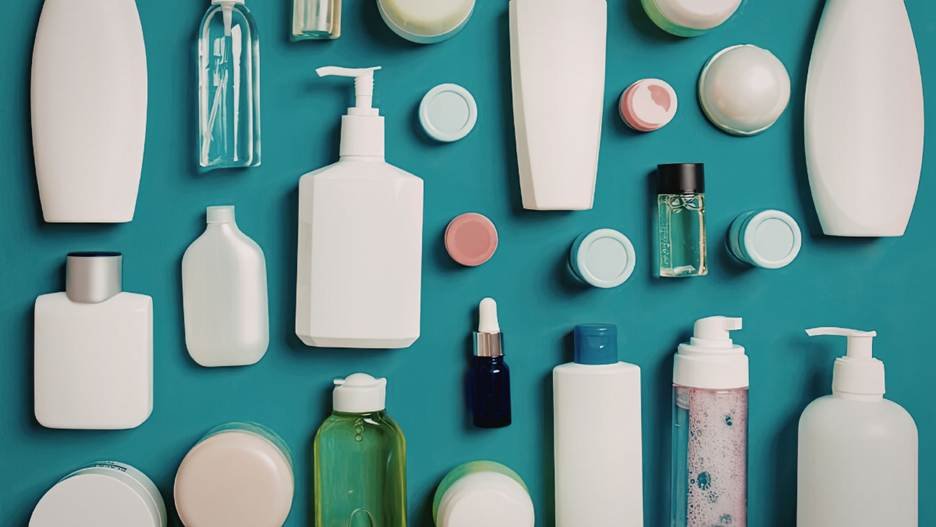
Even if a factory has the flexibility to mix a smaller batch of liquid or paste, your packaging selection can completely dictate your final minimums. Packaging vendors operate on their own distinct infrastructure, where minimums are driven by machinery setup demands rather than raw material costs.
- Custom Printed Tubes: Fully custom-printed toothpaste tubes (whether aluminum-barrier or plastic laminated) require a minimum print run of 20,000 or more units. The flexographic or gravure printing plates used in high-speed tube printing carry setup costs that require high volume to be cost-effective.
- Custom Bottles: Custom injection-molded bottles for mouthwash or oral sprays typically require a minimum of 10,000 units to justify running the specialized blow-molding or injection machinery.
Because of these upstream constraints, packaging decisions and oral care OEM production volumes cannot be planned separately; they are inherently linked.
The table below breaks down how your packaging path directly controls your private label MOQ and overall launch viability:
| Feature | Stock Packaging | Custom Packaging |
| Baseline MOQ | 3,000 to 5,000 units | 10,000 to 20,000+ units |
| Financial Viability | Ideal for Seed/Launch | Requires Proven Velocity |
| Customization Method | Silk-screen / Labeling | Custom molds and tooling |
For a new brand, using stock packaging is almost always the more strategic first move. It allows you to reach the market faster, satisfies upstream component minimums at a much lower threshold, and preserves your working capital for inventory replenishment once sales velocity is established.
Why Some OEM Factories Can Offer Lower MOQs
The MOQ baseline is not entirely fixed across the industry. It moves based almost entirely on how much customization you ask the factory to handle.
Every custom variable introduced, whether it is a completely bespoke formula, proprietary packaging shapes, or a highly unique flavor system, adds configuration time, increases machine purge waste, and pushes the production threshold higher.
Stripping those variables back allows the MOQ to drop naturally.
This is the core reality behind low MOQ manufacturing: it is less about finding an unusually flexible factory and more about choosing a production model that removes the variables that drive setup costs up.
| Production Model | Typical MOQ Range | Customization Scope | Direct Asset Impact |
| White Label Program | 1,000 to 2,500 units | Zero formula or packaging changes. Brand logo applied to stock items. | No setup waste. Uses pre-run bulk inventory. |
| Stock Formula | 3,000 to 5,000 units | Pre-validated base liquid. Brand customizes label art only. | Bypasses custom R&D and stability testing delays. |
| Stock Packaging | 3,000 to 5,000 units | Custom liquid chemistry filled into factory-held bottles or tubes. | Eliminates upstream packaging vendor plate setup minimums. |
| Fully Customized Project | 10,000 to 20,000+ units | Bespoke formula paired with proprietary custom tooling and molds. | Requires full line calibration, high purge waste, and long setups. |
If you are just entering the market with a tight budget, you do not have to choose between quality and viability. They have to choose the right production model for where you are right now.
How New Oral Care Brands Can Start With Lower MOQs
Reducing MOQ requirements usually comes from limiting product customization.
Consider four practical approaches to lower initial volumes while maintaining an efficient per-unit cost:
1. Use Stock Packaging
Packaging suppliers often drive component minimums more than the formula itself. Custom-printed tubes or unique, custom-molded bottles require massive industrial runs to set up. By opting for stock packaging already held in inventory by the factory, you bypass a component manufacturer’s steep setup minimums and can secure a much lower low MOQ oral care manufacturing run.
2. Start With One SKU
Splitting an initial launch budget across multiple flavors or variants fragments your purchasing power. Launching one SKU first improves factory production efficiency and lowers overall startup costs. Running 10,000 units of a single toothpaste MOQ or mouthwash MOQ is highly streamlined for a filling station, whereas splitting that volume into four separate 2,500-unit runs introduces cleaning downtime, machine recalibration, and cost overruns.
3. Use a Pre-Validated Formula
Instead of developing a new formulation from scratch, consider a private-label oral care approach by using a thoroughly tested base formula. You can still customize the flavor, color, or marketing positioning to keep the brand distinct, but you skip the extensive stability testing, microbial challenges, and development costs that require high-volume manufacturing runs to amortize.
4. Validate Demand Before Full Customization
Many successful oral care brands launch their first iteration using stock packaging or semi-custom solutions to establish market presence. Once real-world sales and demand are proven, you can confidently invest in custom injection molds, premium packaging, and proprietary formulations for subsequent production rounds.
The goal is simply reaching a production volume that keeps the product stable, commercially viable, and scalable. Partnering with an experienced oral care OEM helps you structure a launch that protects initial cash flow while setting up a reliable supply chain.
How Mixing Tanks and Filling Lines Dictate Batch Size
To understand why micro-batches complicate production, look at the physical mechanics of the factory floor.
When your product development team runs a lab sample, they are working in a 500mL to 2L beaker in a controlled environment. When that formula moves to oral care manufacturing at production scale, it goes into a vacuum emulsifying tank that holds between 1,000L and 5,000L.
The Agitator Limit
Industrial mixing tanks feature homogenization blades and agitators fixed at specific heights. They require a minimum volume to create uniform shear forces and blend a proper emulsion. If a 2,000L tank is filled with only 300L of ingredients, the liquid cannot properly reach the mixing blades.
In a toothpaste batch, this causes crucial abrasives like hydrated silica to settle out and in a mouthwash batch, it leads to uneven distribution of active ingredients.
Hold-Up Volume and Yield Loss
Large-scale production plumbing, pumps, and tank walls naturally retain “hold-up volume”—a layer of product coating interior surfaces that cannot be recovered. This residual product accounts for 10kg to 30kg per batch.
On a standard 10,000-unit run, a 20kg hold-up is a minor variance. On a 1,000-unit micro-batch, that same 20kg represents an immediate yield loss of 10% to 15% of your total formula before filling even begins.
Line Aeration and Foaming
Low-volume batches empty machine hoppers faster than automated filling lines are designed to process. When the fluid level in a hopper drops too low, the filling pumps draw in atmospheric air along with the product. This aeration causes instant foaming, which disrupts fill-weight accuracy and leads to short-filled containers that fail net-content regulatory requirements.
Why Very Low MOQs Cause Instability and High Costs
Forcing an industrial line to run a micro-batch introduces distinct formulation chemistry risks that often do not show up until after the product is packaged.
Thermal Fatigue in Flavor Oils
Industrial mixing tanks use steam-jacketed outer walls to heat batches. When a tiny volume of product sits inside a massive jacketed tank, heat distribution becomes uneven, creating localized hot spots.
This excessive heat can burn off volatile flavor elements in oral care products, like natural mint oils, which begin degrading with prolonged exposure above 60°C. The product can arrive at the consumer tasting flat or cooked, creating quality control inconsistencies.
pH and Viscosity Drift
In a large 2,000L production batch, a minor 2-gram variance in a pH-adjusting agent (like sodium hydroxide) is completely absorbed by the total volume’s buffering capacity. In a small 200L micro-batch, that identical 2-gram variance can swing the pH by an entire unit.
Because oral care formulas require a strict window between pH 5.5 and 7.0 to remain safe and stable, a sudden shift can cause a batch to fail standard stability testing, requiring a complete, costly reformulation.
Sedimentation and Suspension Failure
Key functional ingredients, including zinc compounds, fluoride salts, and botanical extracts, require sustained, high-shear mixing to remain uniformly suspended throughout a heavy paste or liquid.
Low-volume batches frequently fail to generate the pressure differentials required for high-shear emulsifiers to operate within their design range. This results in sedimentation, where active ingredients concentrate heavily at the bottom of the batch, leading to an inconsistent, non-compliant filling run.
Realistic MOQ Planning for Your Startup Brand
Understanding these operational boundaries makes it easier to plan a practical launch strategy. Early-stage brands can establish a stable production structure without overextending initial capital using three moves:
Play 1: Leverage Factory Stock Components
Inquire about the specific bottles, caps, and tubes your manufacturer already carries in bulk inventory. Utilizing these components eliminates upstream packaging vendor setup minimums, allowing your project MOQ to align directly with the factory’s mixing baseline (typically 3,000 to 5,000 units).
Play 2: Select a Pre-Validated Formulation
Developing a custom formula from scratch adds months of R&D and stability verification. Opting for a pre-stabilized stock formula removes these upfront timelines entirely. You retain the ability to customize aspects like top-note flavors, but the foundational base is already fully proven.
Play 3: Consolidate Your SKUs
Focus your initial budget on launching a single SKU at 10,000 units rather than splitting that capital across four separate flavor variants at 2,500 units each. This secures a lower per-unit cost, simplifies line setups, and ensures you have enough consistent inventory to effectively test your target market.
For more guidance on structuring your first production deal, the MOQ negotiation and shelf life terms breakdown and the supplier selection guide for mouthwash are worth reading before you contact any factory.
Frequently Asked Questions
Can I order 1,000 toothpaste units?
Getting started with 1,000 units is a common goal for a new launch, but standard industrial machinery makes this exact number tough to reach on a custom run. To give you the best product possible, commercial mixing tanks and automated filling stations require a higher baseline volume just to mix ingredients smoothly and stabilize pressure.
If a factory runs a micro-batch below its equipment limits, you lose too much paste to mechanical waste. That said, don’t lose heart because you can often find a great path forward by joining a white-label program. This lets you use pre-run bulk paste so you can bypass those heavy setup limits entirely while testing your market.
What is the MOQ for private label mouthwash?
If you leverage a manufacturer’s stock bottles and pre-validated formulas, you can usually get your private label mouthwash journey started with a manageable MOQ between 3,000 and 5,000 units. This is an excellent way to keep your upfront costs low.
However, if your vision includes fully custom-molded bottles, unique shapes, or a proprietary flavor blend, factories will usually ask for 10,000 or more units.
This higher floor simply ensures there is enough fluid volume to mix your active ingredients perfectly and satisfies the tooling minimums set by custom packaging suppliers.
Why does custom packaging increase MOQ?
It can be frustrating when packaging vendors push your minimums up, but it all comes down to how their printing presses and molding machines operate. Custom-printed toothpaste tubes, for example, rely on massive, high-speed lines that require complex plate adjustments and significant testing waste just to align your artwork.
Because these setup overheads are so high, upstream packaging suppliers have to enforce strict minimums of 20,000+ units to break even. Since your OEM factory can only fill the containers they have on hand, their minimum production run is naturally bound to those packaging numbers.
Can the MOQ be reduced for repeat orders?
The physical size of the factory’s mixing tanks stays the same, but you absolutely have room to optimize your options on reorders! If you have the budget to buy your custom packaging materials in a larger bulk quantity upfront, your OEM partner can warehouse those extra containers for you.
When it’s time for your second and third production runs, you are no longer tied down by upstream packaging setup limits. This allows the factory to drop your repeat order threshold down to match their baseline liquid blending capacity, saving you valuable capital.
What is the difference between OEM MOQ and private label MOQ?
Think of an OEM MOQ as the setup requirement for a product built completely from scratch. Because you are developing custom chemistry, unique active blends, and proprietary packaging, the factory faces intensive machine calibration and strict stability testing, which pushes the minimum up to 10,000 or 20,000+ units.
A private label MOQ is a much friendlier entry point for emerging brands, usually landing around 3,000 to 5,000 units. It saves you time and money because you are utilizing trusted, ready-to-go formulas and stock packaging that the factory already keeps in stock.
Scale Safely with RuiqiGo
Before you lock in a production volume with any oral care OEM, there are a few things worth confirming first.
- Does the factory run pilot-scale batches so your formula can be validated at 500L before committing to a 5,000L production run?
- Are the packaging components they recommend already held in their inventory, or are they quoting you on components that carry their own upstream minimums?
- Can they show you real production capacity data, not just claimed output numbers?
- Do they have existing supplier relationships that can lower your component minimums below the standard packaging vendor thresholds?
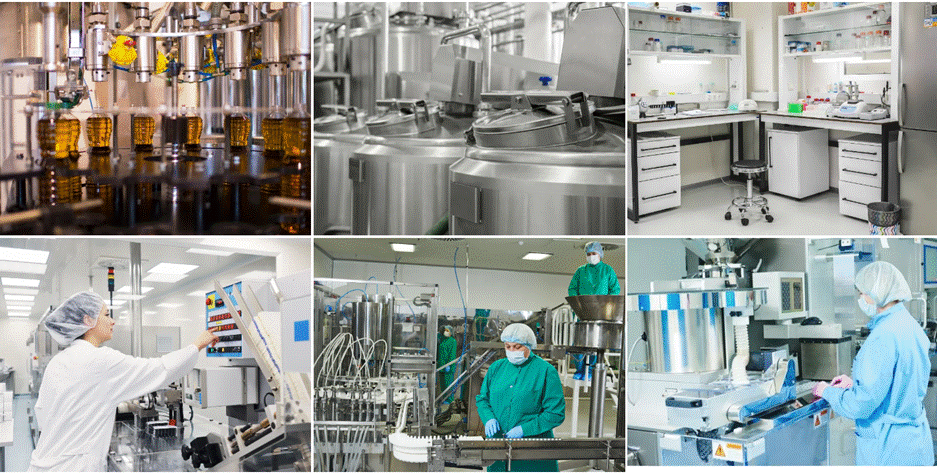
RuiqiGo runs mixing lines from 500L pilot scale up to 5,000L mass production tanks, which means your formula gets validated at a small batch before it ever touches a full production run.
Our private label service is built around stock components we already hold, so brands launching at under 5,000 units can move without being blocked by upstream packaging minimums. And because we work with established packaging suppliers at volume, we can unlock component minimums that would be unavailable to a brand negotiating alone.
The goal is not to push you into the highest MOQ your budget can technically absorb. It is to match your production volume to the model that keeps your per-unit cost viable and your product stable at scale.
Ready to map out your first oral care order?
Contact the RuiqiGo production team and tell us your target SKU, estimated volume, and packaging direction. We will come back with a production structure that fits where your brand is right now.