Private label manufacturing is often the fastest way for a new skincare brand to enter the market. A manufacturer handles the formulation chemistry, filling equipment, quality checks, and raw material sourcing. What they cannot do is make your early decisions for you.
Most production issues happen weeks or months earlier, during development, when a buyer locks in packaging before the formula is ready, skips stability testing to save time, or underestimates how MOQ planning affects cash flow. These mistakes are common, and they are avoidable.
This article walks through the seven most common mistakes new brands make when launching a privat- label body lotion, along with the fix for each one.
The Most Common Mistakes New Brands Make When Launching a Private Label Body Lotion
Private-label body lotion development involves formulation, packaging, compliance, and supplier decisions running at the same time. When any one of these moves is in the wrong sequence, it creates a ripple effect across the rest of your production timeline.
Here is where most buyers go wrong:
Mistake 1: Sourcing Body Lotion Packaging Before Finalizing the Formula
Many buyers select a bottle before they know what is going into it. That is a costly sequence error.
Body lotion formulas vary significantly in viscosity, oil content, and active ingredient concentration. A thick, high-oil formula will clog a standard pump. A formula with natural botanical extracts may react with certain plastics over time, causing discoloration or degradation. A product containing photosensitive ingredients needs a UV-resistant container, or the actives break down on the shelf.
Finalize the formula first. Once your manufacturer confirms the physical properties of the liquid, including its thickness, pH range, and chemical profile, you can match packaging to those specifications rather than retrofitting the formula to fit a bottle you already ordered.
This sequence also affects fill weight calculations, label sizing, and outer box dimensions. Getting the order right saves you from reprinting, redesigning, or scrapping packaging inventory before a single unit ships.
Mistake 2: Trying to Create a Formulation for Everyone
A body lotion for all skin types sounds like a broader opportunity. In reality, it creates a harder product to formulate and a weaker product to position.
When your target is too wide, ingredient selection becomes contradictory. A formulation optimized for dry skin relies on occlusives like shea butter and beeswax and heavy emollients like ceramides and plant oils.
One targeting oily or acne-prone skin requires lighter humectants like glycerin and non-comedogenic carriers. Trying to serve both pushes the formula toward compromise rather than performance.
Manufacturers also need a clear product direction to recommend the right active ingredients, set realistic pricing, and structure lab samples accurately.
A buyer who requests a general moisturizer will spend more revision rounds in sampling than one who comes in with a specific brief, such as a whitening body lotion with brightening actives, or a targeted body lotion for dry skin built around deep emollients.
Define the skin type, the primary benefit, and the texture profile before you go into formulation. That specificity cuts sampling time and keeps your cost per kilogram predictable.
Mistake 3: Postponing Reality-Based MOQ Planning
MOQ conversations tend to get pushed to the end of development. By then, a buyer has already committed to a formula direction, a packaging style, and a brand concept, and the MOQ numbers come as a shock.
Body lotion MOQ is not a single number. It applies separately across three production inputs: the bulk liquid formula, the physical bottles or tubes, and the printed labels. Each component carries its own minimum, and those minimums do not always align cleanly.
A manufacturer may require a 300-kilogram minimum on the bulk formula. The bottle supplier may require a minimum of 2,000 units per SKU. The label printer may have a minimum print run of 1,000 sheets. If you are launching two fragrances under the same base, packaging and label minimums apply per variant, not per brand.
Work through your MOQ structure before you finalize your SKU count. If your initial capital is limited, launching one fragrance in one size is a more stable entry point than launching a range of four. You can expand once the first production run is validated.
Mistake 4: Mismanaging the Production Timeline for Fragrance Selection
Scent is often treated as the final creative decision, added after the formula is otherwise complete. This creates real production problems.
Fragrance oils are chemically active compounds. Depending on their composition, they can alter the viscosity of a lotion base, change the color of the emulsion, or destabilize the preservative system. A fragrance with a high proportion of citrus compounds may accelerate oxidation. Certain floral accords can interact with the emulsifier and cause separation over time.
Fragrance selection must happen alongside early lab sampling, not after the formula is finalized. Your manufacturer needs to test the scent within the base, run stability checks on the fragranced sample, and confirm that the fragrance load does not exceed the threshold the preservative system can support.
Selecting a scent late in development means restarting stability testing, which adds weeks to your production timeline. Build fragrance selection into the early sampling phase and treat it as a formulation variable, not a finishing touch.
Mistake 5: Skipping Technical Body Lotion Stability Testing
Stability testing feels like an optional step when you are trying to move quickly. It is not optional. It is the step that tells you whether your product will still be a lotion six months after it leaves the warehouse.
Body lotion is an emulsion, a mixture of water and oil phases held together by emulsifiers. That structure is not permanently stable. Under temperature fluctuations, UV exposure, or microbial contamination, emulsions can separate, change color, develop off-odors, or lose preservative efficacy.
Standard stability testing runs samples through accelerated aging protocols, including high-temperature oven storage at 40 to 50 degrees Celsius, freeze-thaw cycles, and room-temperature observation over 8 to 12 weeks.
Microbiological challenge testing checks whether the preservative system can prevent bacterial and fungal growth under realistic conditions.
If a formula fails stability, catching it in the lab costs you a reformulation and a few extra weeks. Catching it after 10,000 units are filled and labelled costs you the entire batch.
Mistake 6: Overlooking US Cosmetic Labeling Requirements
US cosmetic labeling is regulated under FDA guidelines, and the requirements are specific enough that errors on finished artwork are common among first-time brands.
The most frequent issues involve the ingredient declaration. Ingredients must be listed in descending order of predominance by weight, using INCI names rather than trade names or common names. Net contents must appear on the front panel in both metric and US customary units. The name and place of business of the responsible distributor must also be included.
Certain claims, particularly any language that implies a drug-like effect, can trigger additional regulatory review and reclassify your product as an OTC drug.
These requirements must be built into your label artwork before you go to print. A regulatory review checklist, completed alongside your packaging design, prevents costly artwork corrections after print plates are made. If you are selling through Amazon or retail channels, compliance audits will check label accuracy. Errors at that stage mean pulled listings or rejected shipments, not just a label reprint.
Mistake 7: Partnering with an Unverified Manufacturer

A manufacturer without verifiable quality certifications is a production risk you cannot manage around. No amount of sampling and approval rounds compensates for a facility that lacks proper documentation standards, clean-room controls, or batch traceability.
The two certifications that carry meaningful weight in the body lotion category are GMP, Good Manufacturing Practices, and ISO 22716, the international standard for cosmetic manufacturing.
GMP ensures that the facility operates with consistent hygiene protocols, equipment calibration, and personnel training. ISO 22716 adds a formal framework for batch documentation, material traceability, and quality audit readiness.
When vetting a manufacturer, request their certification documents and verify the issuing body. Ask how recently the facility underwent an external audit and whether they can provide an inspection summary.
Unverified manufacturers may offer lower unit pricing, but production inconsistency, undisclosed raw material substitutions, and documentation gaps create downstream costs that erase any initial savings.
How Much Does It Cost to Launch a Private Label Body Lotion Brand?
Understanding your cost structure before committing to a production run is basic financial planning, and the numbers vary more than most buyers expect. Below is a realistic breakdown of what each stage costs.
Formula Cost
A standard emollient base with synthetic fragrance and conventional preservatives typically runs between USD 3 and USD 8 per kilogram at mid-range MOQs. Formulas incorporating high-concentration actives such as niacinamide, tranexamic acid, or certified organic raw materials can push that figure to USD 12 to USD 20 per kilogram or higher.
Custom formulations developed from scratch also carry R and D fees ranging from USD 300 to USD 1,500, depending on complexity and revision rounds.
Packaging Cost
A basic HDPE bottle with a standard pump typically costs between USD 0.30 and USD 0.80 per unit at MOQ. Glass bottles with custom closures can run USD 1.50 to USD 4.00 per unit or more.
Outer cartons add USD 0.10 to USD 0.50 per unit, depending on print specification and material weight. These costs compound quickly across multiple SKUs, which is why keeping your initial launch range tight makes financial sense.
MOQ Impact on Capital
At a 300-kilogram bulk minimum producing approximately 1,000 units of a 300ml lotion, your formula cost alone could run USD 2,400 to USD 6,000 before packaging and labels are factored in.
Add packaging at USD 0.50 per unit and labels at USD 0.20 per unit, and your minimum committed spend per SKU sits somewhere between USD 3,100 and USD 6,700. Multiply that across two or three variants, and you can see why early MOQ planning matters.
Sampling and R and D Costs
Budget for two to four rounds of bench sampling before a formula is approved for production. Initial sampling fees typically range from USD 200 to USD 800 per round, depending on your manufacturer. Fragrance testing within the base adds time and may carry a separate lab fee. Factor these costs into your pre-production budget, not your contingency.
Compliance and Testing Costs
Accelerated stability testing runs across 8 to 12 weeks and typically costs between USD 300 and USD 800 per formula variant. Preservative efficacy testing is a separate procedure costing roughly USD 150 to USD 400.
If you are preparing for EU or UK market entry, a third-party cosmetic safety assessment adds USD 500 to USD 1,500 per product. These are fixed pre-production costs regardless of your production volume.
How to Choose a Private Label Body Lotion Manufacturer
Not every contract manufacturer is equipped to handle body lotion production at a consistent quality level. Body lotion is an emulsion, and emulsions require specific equipment, process control, and testing infrastructure that general filling facilities do not always have. Before you commit to a body lotion manufacturer, verify the following:
- GMP and ISO 22716 certification. Request the original documents and cross-reference the certificate number with the issuing body. Do not accept verbal confirmation.
- Emulsion expertise. Ask how the manufacturer handles scale-up from bench sample to full production batch. Request their standard deviation data on viscosity and pH across batches.
- In-house laboratory and testing infrastructure. A manufacturer who outsources every basic check adds communication steps and turnaround delays to every revision cycle.
- Raw material documentation. Certificates of analysis, safety data sheets, and batch records must be available on request. These are required for customs clearance and retail compliance audits.
- Scale-up equipment capability. Confirm that the filling line they use for your production run matches the viscosity and flow characteristics of your approved formula.
Frequently Asked Questions About Private Label Body Lotion Development
What is the typical MOQ for private label body lotion?
Most body lotion manufacturers set bulk formula minimums between 200 and 500 kilograms per batch. Packaging and label minimums are set separately and depend on your chosen components. Each SKU carries its own packaging MOQ, so launching multiple variants increases your total minimum commitment.
Can I launch a body lotion brand with only one SKU?
Yes. Many new brands start with a single SKU to simplify MOQ planning, inventory management, packaging costs, and production risk. Additional fragrances or variants can be added after the first production run is validated.
How long does the entire development and production timeline take?
From initial brief to production-ready approval, a realistic timeline runs 10 to 16 weeks. This includes sampling, stability testing, artwork approval, and production scheduling. Fragrance testing and additional revision rounds can extend that timeline if they are not built into the early phase.
Can I launch with multiple fragrances under a single base formula?
Yes. A single approved base can support multiple scent variants, but each fragrance must be tested within the base separately. Stability results from one variant do not automatically apply to another. Packaging and label MOQs also apply per variant.
How do MOQ requirements affect my initial launch budget?
MOQ determines your minimum capital commitment across formula, bottles, and labels. If those minimums do not align, you may carry excess inventory in one component. Consolidating your SKU count at launch reduces the risk of over-committing capital before your first production run is validated.
How do I verify a manufacturer’s GMP or ISO certificates online?
ISO 22716 certificates are issued by accredited certification bodies. You can cross-reference a certificate number directly with the issuing body’s public register. For GMP certification, request the original document and confirm the name of the auditing organization, then contact that organization directly to verify.
Do I need specific licensing to sell private-label body lotion?
In the US, cosmetics do not require pre-market FDA approval, but labeling must comply with FDA regulations under the Federal Food, Drug, and Cosmetic Act. If your product makes any claim that implies a physiological effect beyond cosmetic action, it may be reclassified as an OTC drug and require additional compliance steps before it can be sold.
Launch Your Private Label Body Lotion Project with Confidence
Mistakes in private label body lotion development are rarely random. They tend to follow the same pattern: decisions made too early, steps skipped to save time, and suppliers chosen without proper verification. Before you move into production, run through this checklist:
- Has the formula been finalized before packaging is ordered?
- Is your product direction specific enough to guide ingredient selection and pricing?
- Have you mapped out MOQ requirements across formula, bottles, and labels?
- Is fragrance selection included in the early sampling phase?
- Is stability testing scheduled before the production run is confirmed?
- Has your label artwork been reviewed against FDA labeling requirements?
- Have you verified your manufacturer’s GMP and ISO 22716 certifications?
If any of those answers are uncertain, that is where your production risk sits.
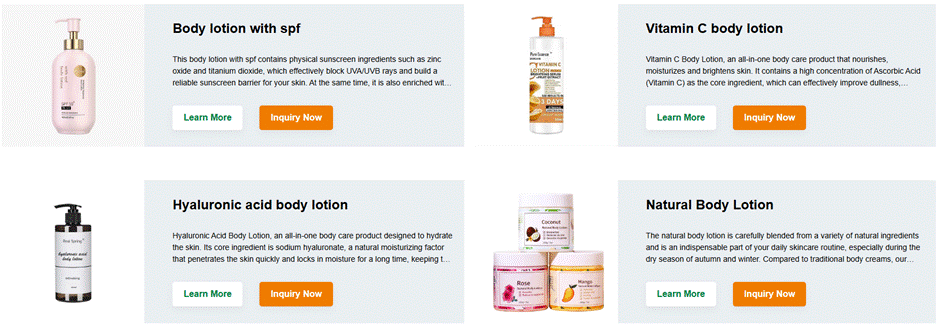
RuiqiGo works with new and growing brands on private-label body lotion development from initial formulation through full production.
With in-house testing infrastructure, verified GMP and ISO 22716 certification, and full documentation transparency at every stage, RuiqiGo is built to support brands that need a reliable manufacturing partner, not just a filling facility.
Ready to plan your first production run? Contact the RuiqiGo team to get started.